

An electrical cable route should be planned before trays begin arriving at the project site. Without coordination, installers can encounter congested pathways, unsuitable bends, insufficient tray capacity, or clashes with ducts, pipes, structural members, and other building services.
Working with a capable Cable Tray Manufacturer becomes more productive when the project team has already identified the fundamental requirements of the cable pathway.
Start With the Actual Cable Schedule
Tray sizing should be based on the cables that need to travel through a route rather than an approximate visual estimate.
Review cable types, outside diameters, quantities, grouping requirements, and applicable project standards. Engineers should also determine whether spare capacity is required for reasonably anticipated future additions.
Oversizing every route can unnecessarily increase material requirements and consume valuable service space. Undersizing creates the opposite problem and may lead to crowded installation or later modification.
Map the Route Before Ordering
The main pathway should be coordinated with architectural, structural, mechanical, plumbing, fire protection, and other services.
Identify:
- Straight runs
- Horizontal changes in direction
- Vertical changes
- Branching points
- Width transitions
- Equipment entry locations
- Support positions
- Maintenance access requirements
This information helps determine both straight tray quantities and the accessories needed to complete the route.
Match Construction to Application
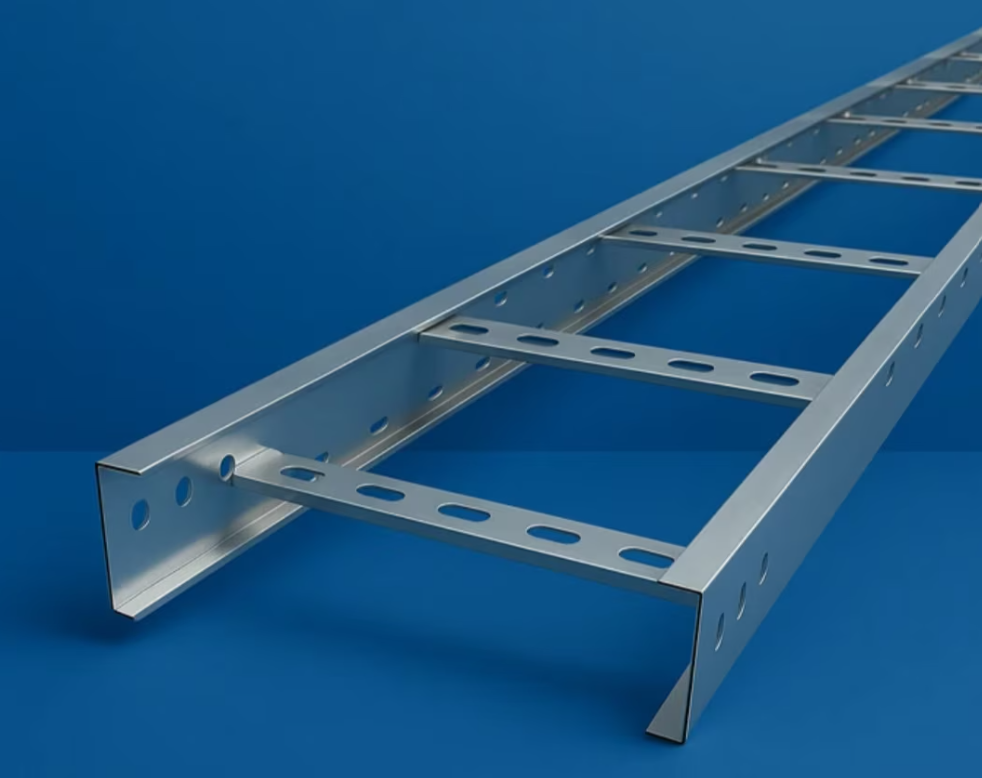
Ladder, perforated, and other cable-management configurations serve different installation needs. The choice should reflect cable characteristics, loading, ventilation, accessibility, and environmental exposure.
Material and surface finish also deserve attention. Indoor electrical rooms, production facilities, outdoor areas, and corrosive environments may require different solutions.
A tray specification should therefore be considered as a complete combination of construction, dimensions, material, finish, loading requirements, and accessories.
Why This Matters in Pune
Industrial and commercial development throughout Pune and Maharashtra creates highly varied electrical infrastructure requirements. Manufacturing facilities may have extensive machinery power distribution, while offices, hospitals, warehouses, institutions, and commercial developments can require very different cable pathways.
Devansh Enterprises supports projects where cable tray fabrication needs to correspond with practical installation requirements.
Before placing an order with a Cable Tray Manufacturer, project teams can reduce avoidable changes by finalizing the cable schedule, coordinated route, dimensions, material, finish, and accessories.
A cable tray system is ultimately infrastructure for the electrical network. Planning it as a complete route rather than purchasing straight sections independently can improve installation efficiency, accessibility, and long-term cable organization.