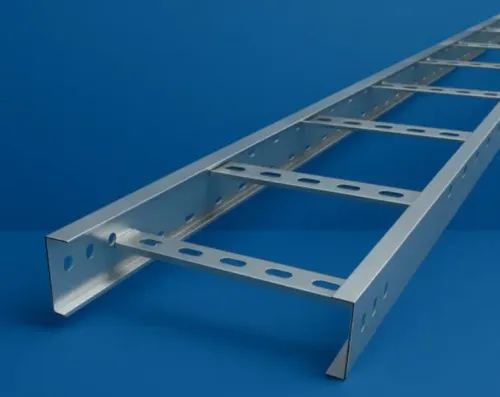


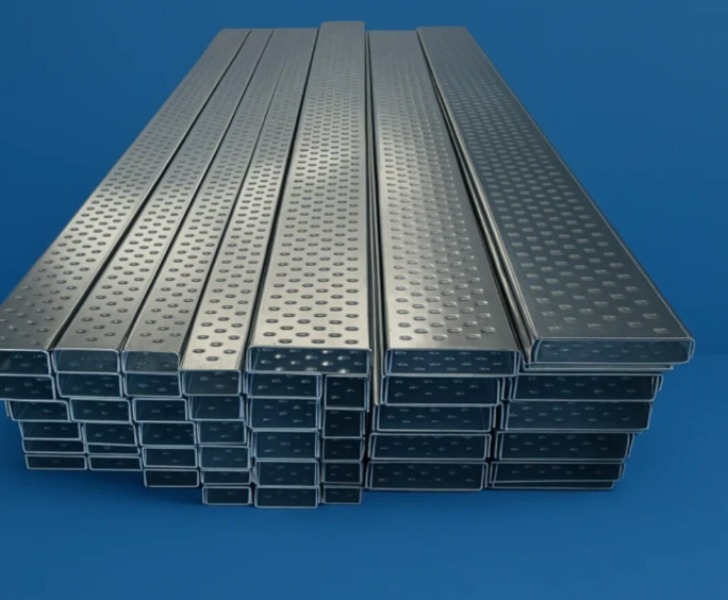
Cable management becomes increasingly important as an electrical installation grows. Power, control, instrumentation, and other cables need defined routes so that installation remains orderly and future maintenance does not become unnecessarily complicated. This is where products supplied by a Perforated Cable Tray Manufacturer become relevant.
A perforated cable tray typically consists of a formed metal base containing ventilation openings along with raised side walls. It offers more continuous cable support than an open ladder tray while still providing openings that assist ventilation.
What Makes Perforated Trays Useful
The continuous base helps support smaller cables along a defined pathway. Instead of relying primarily on spaced rungs, cables rest across a broader surface.
This makes perforated trays suitable for many electrical applications involving moderate cable loads and organized cable distribution.
Typical applications can include:
- Commercial electrical installations
- Industrial control wiring
- Instrumentation routes
- Manufacturing facilities
- Utility areas
- Electrical service rooms
- Building infrastructure
- Automation projects
The perforations also make installation more practical because they can support ventilation and provide useful fixing possibilities depending on the system design.
Selecting the Correct Tray
There is no single perforated tray specification suitable for every installation. Width and depth need to match the number and type of cables being carried.
Project teams should consider how much space the current cables require while also reviewing whether reasonable capacity for planned additions is necessary.
Material selection matters as well. Environmental exposure, indoor or outdoor installation, moisture conditions, corrosion risk, and project specifications can influence whether a particular finish or protective treatment is appropriate.
Mechanical strength is another important consideration. The tray needs to maintain its intended form under the expected load when installed at the specified support intervals.
Route Planning Matters as Much as Tray Selection
Electrical pathways rarely travel in a perfectly straight line. Real projects involve corners, changes in elevation, branching routes, and transitions between different tray sizes.
Bends, tees, crosses, reducers, couplers, and other accessories therefore need to be coordinated with the main tray sections.
This is particularly relevant in Pune, where electrical installations range from industrial units around major manufacturing zones to commercial and institutional developments across the city and surrounding areas of Maharashtra.
Devansh Enterprises manufactures cable-management solutions for project requirements where dimensions, material selection, accessories, and installation conditions need to be considered together.
When evaluating a Perforated Cable Tray Manufacturer, buyers should look beyond the basic tray dimensions. A properly planned system considers cable type, loading, route geometry, installation environment, accessories, and future accessibility as interconnected parts of the electrical infrastructure.