


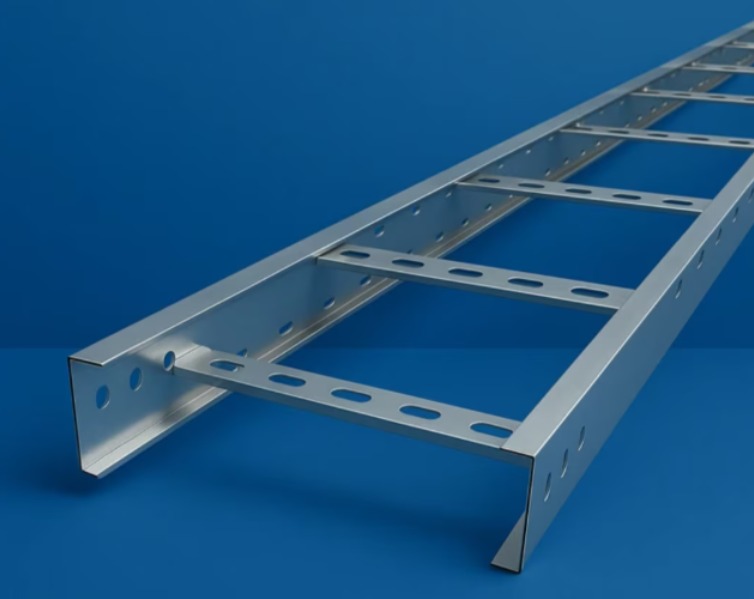
Industrial electrical installations often involve power cables that are heavier, larger, and more difficult to manage than standard communication or control wiring. In these situations, choosing the right cable-support system becomes an important part of electrical planning. A reliable Ladder Type Cable Tray Manufacturer can provide tray systems designed for organized routing while allowing convenient cable access and ventilation.
Ladder trays have two longitudinal side rails connected by regularly spaced rungs. This open construction gives them a structure similar to a ladder and makes them particularly useful where long cable runs or heavier electrical cables need support.
Why Ladder Cable Trays Are Used
One of the main advantages of ladder-type trays is ventilation. Power cables can generate heat during operation, especially when several cables are routed together. The open design allows air to circulate around the cables instead of enclosing them inside a completely covered pathway.
Another practical benefit is accessibility. Maintenance teams can inspect cable routes without dismantling large sections of the support system.
Ladder trays are commonly considered for:
- Industrial power distribution
- Manufacturing plants
- Electrical rooms
- Utility installations
- Commercial complexes
- Data and infrastructure projects
- Machinery power connections
- Large building electrical networks
The appropriate tray configuration depends on cable weight, route length, support spacing, environmental conditions, and installation requirements.
Tray Strength Needs Proper Evaluation
Selecting a tray only according to its width can lead to problems. Engineers and contractors should also evaluate the expected cable load and how frequently the tray will be supported.
A wider tray carrying several heavy power cables may require different structural characteristics from a tray carrying a smaller cable bundle.
Bends, tees, reducers, crosses, and other route changes also need to be considered during planning. A well-designed cable pathway should allow cables to travel through the building or plant without unnecessarily difficult turns.
Pune Projects Have Diverse Requirements
Pune, Maharashtra has a broad mix of manufacturing facilities, commercial developments, warehouses, engineering operations, IT infrastructure, and industrial projects. Cable-support requirements can therefore vary considerably between installations.
A factory expansion may require robust ladder trays for new power circuits, while a commercial project may need coordinated cable routes across several floors and service areas.
Before sourcing from a Ladder Type Cable Tray Manufacturer, project teams should provide accurate information about tray dimensions, material requirements, cable loading, route configuration, and installation environment.
Devansh Enterprises serves cable tray requirements where suitable dimensions, fabrication quality, and project-specific selection matter. Understanding the electrical layout before ordering helps ensure that the selected ladder tray supports both present installation requirements and practical maintenance over the life of the electrical system.


