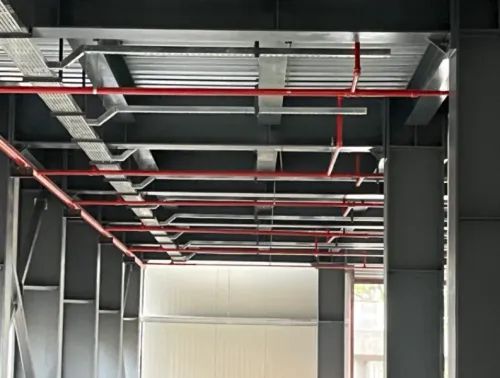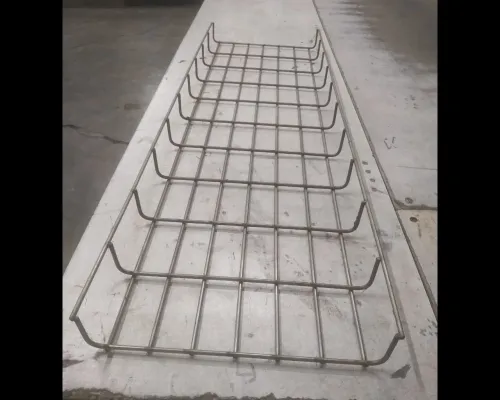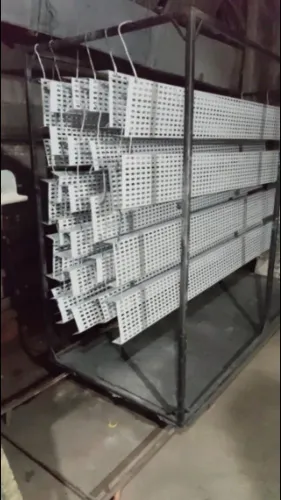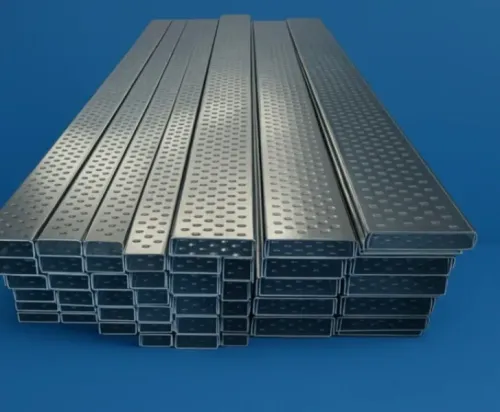
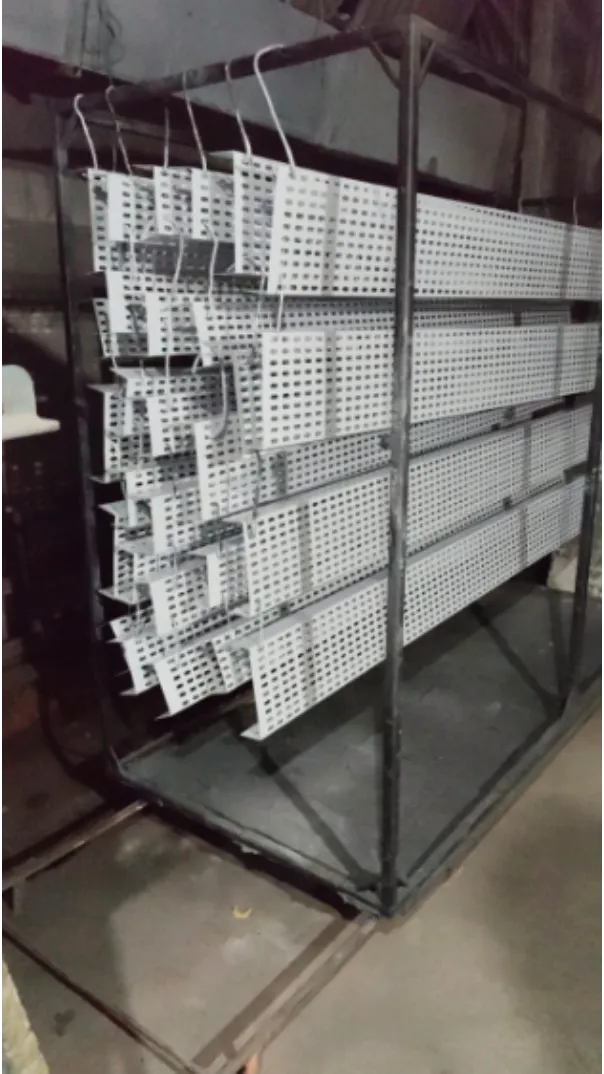
Cable trays installed in visible, humid, dusty, or moderately corrosive locations need appropriate surface protection. Powder coating adds a finished protective layer to the metal tray and can also support colour-based identification within complex electrical systems.
Devansh Enterprises manufactures powder-coated cable trays for projects requiring functional cable support with a uniform surface finish. The trays can be produced in project-specific sizes, thicknesses, colours, and configurations according to installation requirements.
How the Powder-Coating Process Works
During powder coating, a dry finishing material is electrostatically applied to the prepared metal surface. The coated component is then cured under controlled heat, allowing the powder to form a continuous protective film.
The quality of the finished tray depends heavily on surface preparation. Oil, rust, dust, and fabrication residue must be removed before coating. Inadequate preparation can lead to peeling, uneven coverage, or premature surface deterioration.
A properly controlled process should deliver:
- Consistent coating thickness
- Even coverage around bends and edges
- Good surface adhesion
- Resistance to scratches and minor impact
- A clean and uniform appearance
Powder Coated Cable Trays for Pune Facilities
Powder-coated trays are used across Pune in offices, hospitals, educational institutions, production plants, retail facilities, and commercial buildings. They can be valuable in areas where cable routes remain visible and must complement the surrounding interior.
Industrial facilities may also use different colours to distinguish:
- Power cable routes
- Data and communication networks
- Fire-alarm cabling
- Instrumentation systems
- Emergency electrical circuits
- Building-management wiring
Colour coding should follow the project’s approved identification system rather than being selected purely for appearance.
Powder Coating Compared With Galvanised Finishes
Powder coating and galvanisation protect cable trays in different ways.
Powder coating forms an external polymer layer over the prepared surface. It offers a broad colour range and an attractive finish. It is useful for indoor applications and selected industrial environments where visual consistency and moderate surface protection are priorities.
Galvanisation applies a zinc layer that protects the underlying steel. Hot-dip galvanised trays are commonly selected for outdoor, humid, and more demanding industrial conditions.
In some projects, powder coating may be applied over galvanised steel to combine zinc protection with a coloured finish. Suitability depends on coating compatibility, preparation standards, and the surrounding environment.
Questions to Ask Before Selecting a Manufacturer
A buyer evaluating a powder coated cable tray manufacturer should confirm:
- What base material is being used
- How the metal surface is prepared
- Which powder formulation is applied
- Whether coating thickness is controlled
- Which colours and finishes are available
- How cut edges and drilled sections are handled
- Whether matching bends and accessories can be supplied
- How completed trays are packed for transportation
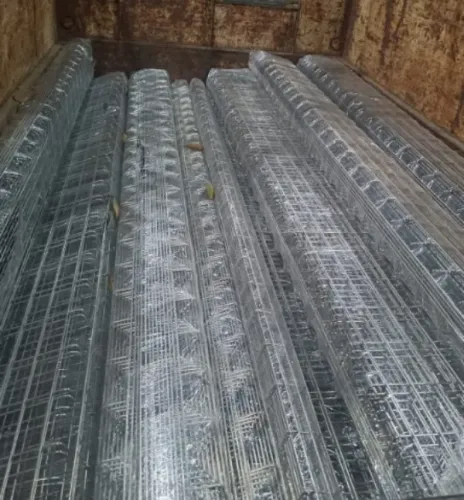
Poor packaging can damage an otherwise satisfactory coating. Trays should be separated and protected so their edges do not scrape adjacent surfaces during handling.
Selecting the Right Tray Configuration
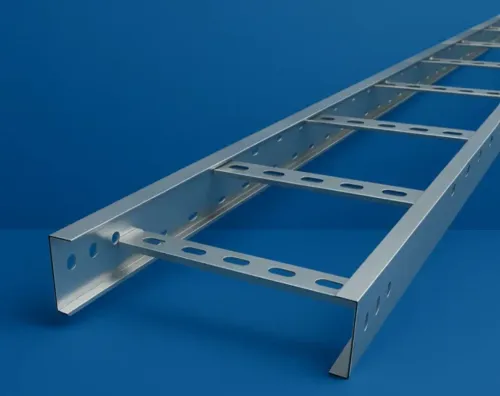
Powder coating can be applied to perforated trays, ladder trays, raceways, covers, bends, reducers, and supporting accessories. The coating does not compensate for an incorrectly designed tray.
Cable load, material thickness, span length, ventilation, and mounting conditions must be assessed separately. Once the structural specification is established, the appropriate surface finish can be selected.
A reliable powder-coated tray system combines accurate fabrication, suitable material strength, thorough surface preparation, uniform curing, and careful transportation. Reviewing these factors helps Pune project teams avoid coating failures and maintain a cleaner cable-management installation.
Keywords