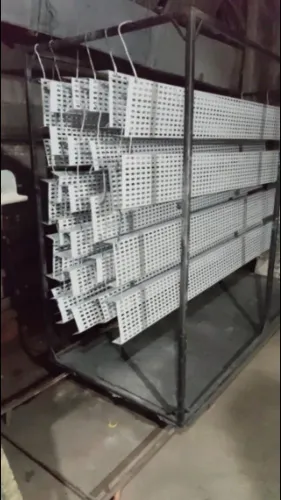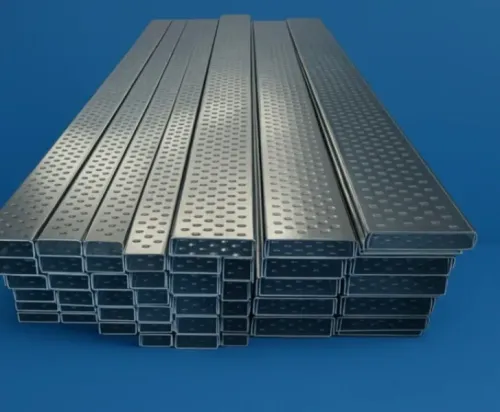
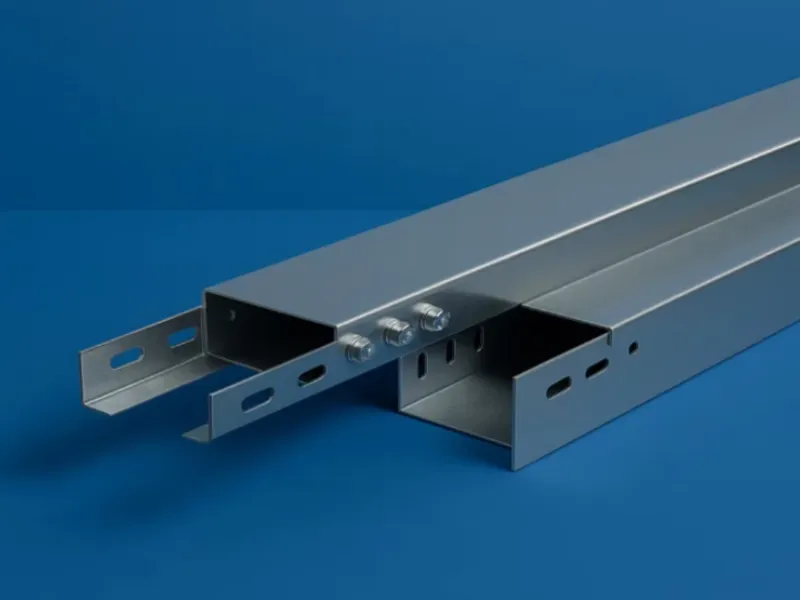
GI raceways provide an enclosed or semi-enclosed pathway for electrical, control, data, and instrumentation wiring. They are commonly used where cables need orderly routing with greater physical protection than an open tray can provide.
Devansh Enterprises manufactures GI raceways for industrial panels, commercial buildings, machinery, automation systems, and structured wiring applications. Choosing the right manufacturer requires attention to dimensions, material quality, cover design, accessories, and installation conditions.
Understanding Where GI Raceways Are Used
Raceways can be installed along walls, ceilings, equipment frames, workstations, and production lines. Typical applications include:
- Control panel wiring
- Machine cable routing
- Building-management systems
- Data and communication networks
- CCTV and security cabling
- Electrical distribution
- Industrial automation
- Office workstation wiring
Their enclosed construction can help protect cables from accidental contact, dust, and minor mechanical impact. Covers also provide a cleaner appearance in visible commercial areas.
GI Raceway Requirements in Pune Facilities
Pune’s manufacturing plants, IT offices, hospitals, warehouses, and institutional buildings require raceways for different cable types. An engineering unit in Pimpri-Chinchwad may need robust raceways near machinery, while an office in Kharadi may prioritise compact design and neat appearance.
The installation environment determines the necessary material thickness and surface finish. Protected indoor applications may use pre-galvanised steel, while areas exposed to moisture may need enhanced corrosion protection.
Check Material and Dimensional Accuracy
GI raceways manufacturers should clearly state the base material, sheet thickness, coating type, and finished dimensions. Buyers should avoid specifications that mention only a general product size.
Accurate manufacturing is important because even minor variations can affect:
- Cover fitment
- Joint alignment
- Cable capacity
- Bend compatibility
- Mounting stability
- Overall route appearance
The raceway cover should fit securely while remaining accessible for inspection and cable additions. A loose cover may vibrate near machinery, while an excessively tight cover can slow maintenance.
Evaluate Cable Capacity Carefully
The internal raceway dimensions should accommodate the required cables without overcrowding. Overfilled raceways make it difficult to trace circuits and can create excessive pressure on cable insulation.
Before ordering, determine:
- Number and size of cables
- Minimum bending radius
- Required cable separation
- Space for future additions
- Entry and exit locations
- Frequency of maintenance access
Internal dividers may be required when power cables and sensitive communication cables share a route.
Confirm Accessories and Custom Fabrication
A complete raceway installation may need bends, tees, junction sections, reducers, end caps, partitions, covers, and mounting brackets. These components should match the straight sections without leaving uneven gaps.
For machinery and special layouts, custom cut-outs or cable-entry provisions may also be needed. Providing detailed drawings helps the manufacturer position these openings accurately before applying the final finish.
Assess Supply Reliability
The manufacturer should be able to maintain consistent dimensions across multiple batches. This becomes important when a project is completed in phases or requires repeat quantities months later.
Buyers should confirm production lead time, inspection procedures, packing standards, and dispatch planning. Raceways must be packed carefully to prevent distorted sides and damaged covers during transportation.
Project teams in Pune can share route drawings, cable quantities, dimensions, and finish requirements with Devansh Enterprises for a suitable GI raceway configuration. A technically complete enquiry enables more accurate manufacturing, pricing, and delivery planning.
Keywords