Cable tray is practical when the project needs accessible routing, future capacity and efficient heat dissipation, but it is not the right containment method for every location or circuit. You will be able to compare tray with conduit, trunking, busbar systems and suspended supports, then specify the tray type, size, finish and installation checks that suit a Pune commercial building.
Key takeaways
- Reserve 20–30% spare tray capacity for future cables and maintenance access.
- Separate power, data and fire-alarm circuits using dedicated trays or approved barriers.
- Choose hot-dip galvanised steel for damp, dusty or exposed service areas.
- Demand load tables, material details, dimensions and inspection records before installation.
Where cable tray earns its place in a Pune commercial building
Cable tray earns its place on accessible routes: electrical rooms, vertical risers, service corridors, suspended ceilings, parking levels and HVAC plant rooms.
cable tray for commercial construction in pune gives power, control and communication cables ventilation, inspection access and room for additions, but the route must be checked for cable mass, support span, deflection and spare capacity.
| Option | Best use | Choose another system when |
|---|---|---|
| Cable tray | Long horizontal runs, risers, electrical rooms and plant areas | Falling water, dust, impact or wash-down demands a sealed enclosure |
| Conduit | Individual circuits, exposed drops and small branch cables | Many cables require frequent access or future additions |
| Trunking | Neat office-distribution routes, small cables and segregated services | High cable weight, long spans or heat dissipation govern |
| Busbar | High-current vertical distribution between floors or large loads | Loads are scattered, flexible routing is needed or circuits change often |
| Suspended cable supports | Short ceiling routes for lightweight data or control cables | Cables need mechanical protection, shielding or a defined enclosure |
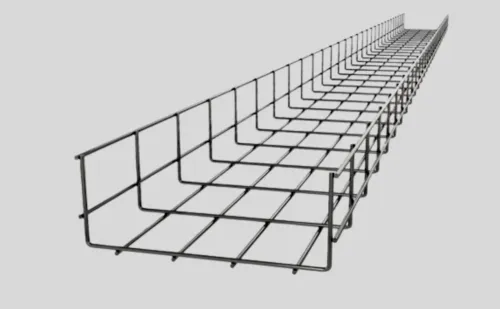
For cable tray for commercial buildings in pune, use open ladder or perforated tray indoors where inspection matters. In basements, terraces and wet or dusty zones, select a suitable cover, finish and material—or choose trunking or conduit for the required ingress protection. Solid-bottom tray suits small cables needing continuous support; wire-mesh suits lightweight data routes.
Suspended supports suit lightweight overhead services, not heavy power feeders. Busbar is usually more efficient than tray for concentrated, high-current riser distribution.
How to size a tray before ordering it
Size the tray from the cable schedule, not from the nominal width printed on a catalogue. For cable tray for commercial buildings in pune, calculate usable width, cable load and support spacing together.
1. List every cable’s outside diameter, quantity and mass per metre. Arrange cables by circuit and required separation, then add documented spare capacity for future circuits. Do not fill the physical tray width; high-current cables need air space and accessible routing.
2. Select tray depth from the largest cable diameter, cleat or tie arrangement, and the space needed to install or remove cables. Check each route’s minimum bending radius, including vertical rises and horizontal elbows; a tray that fits straight runs can still force damaging bends at fittings.
3. Add cable mass, tray mass, covers, cleats and accessories. Check concentrated loads separately at power joints, cable cleats and vertical risers, because a uniform-load rating will not represent those points.
4. Choose support spacing from the manufacturer’s load-versus-span table at the specified deflection limit, rather than from tray thickness alone. Longer spans increase deflection and may require a deeper tray, closer supports or stronger steelwork.
5. Check the load transferred to inserts, channels, anchors and slabs. Riser supports also need cable restraint, while long exposed runs need movement allowances. Keep enough installation clearance above, beside and below the tray for pulling, bending and maintenance.
Request usable-width drawings, splice-plate ratings and test data before ordering. Compare the complete support system, not only tray width.
Choosing tray form for power, data and fire-alarm circuits
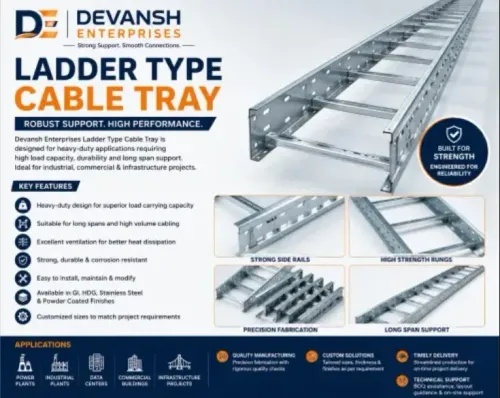
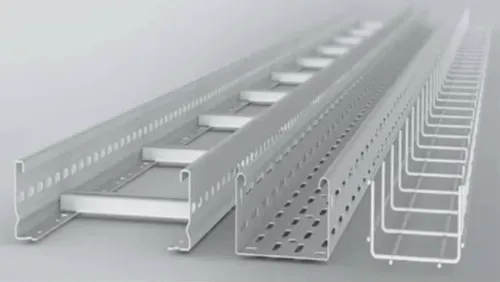
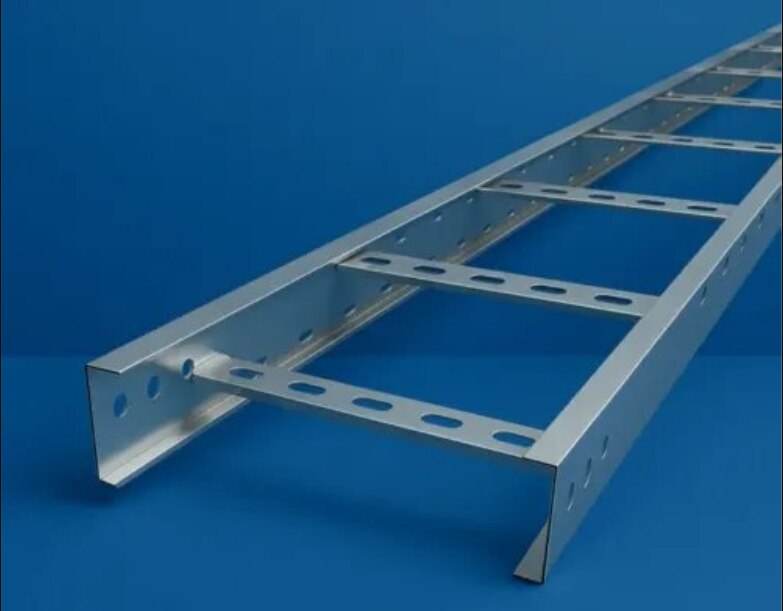
Use ladder tray for heavy power cables, perforated tray for mixed commercial services, wire-mesh tray for small data and control cables, and solid-bottom tray only where cable protection or retention justifies reduced ventilation.
| Form | Best use | Watch for |
|---|---|---|
| Ladder | Large power cables, long spans and vertical runs | Add cleats and check concentrated joint loads; it offers less support to small cables |
| Perforated | Branch power, control and mixed building services | Do not pack it tightly; preserve bending space and heat dissipation |
| Wire-mesh | Data, telecommunications and light control cables in ceilings or raised floors | Protect it from crushing and sharp edges; it suits light loads, not large feeders |
| Solid-bottom | Small cables needing continuous support, falling-dust protection or better containment | Heat removal is poorer, and access for inspection costs more |
An industrial cable tray in Pune is not automatically the right choice for a commercial route. A commercial cable tray in Pune should match the circuit’s load, interference risk, fire function and exposure; use conduit or trunking where impact protection, hygiene or a controlled IP rating matters more.
Segregate circuits using independent trays, metallic partitions or documented spacing:
- Keep power and motor circuits away from data, telecommunications and sensitive control wiring to reduce electromagnetic interference.
- Route emergency-power cables separately from normal supplies so one fault does not disable both groups.
- Give fire-alarm circuits an independent route or rated separation defined by the fire strategy; do not share an indiscriminate tray with power cables.
- Bond metallic trays and maintain separation through crossings, risers and branch points.
Matching the finish to Pune’s moisture, dust and corrosion zones
Choose the finish by exposure, not by building label. A cable tray for commercial construction in Pune suits dry interiors with pre-galvanized steel, while monsoon wetting, condensation, chlorides and chemical fumes demand stronger protection.
| Zone | Suitable tray choice | Protection or qualification |
|---|---|---|
| Electrical rooms and dry risers | Pre-galvanized steel | Keep away from leaks and seal nearby wall penetrations |
| False ceilings and service corridors | Pre-galvanized steel | Use covers where construction dust can settle on cables |
| Basements and parking levels | Hot-dip galvanized steel | Add a cover in damp zones; do not treat the open tray as waterproof |
| Kitchens | Hot-dip galvanized steel or stainless steel | Use a cover in wash-down areas and check grease or cleaning-chemical compatibility |
| HVAC plant rooms | Hot-dip galvanized steel, aluminium or FRP | Allow for condensation and provide covers below leaking valves or drains |
| Chemical spaces | FRP or a coating selected for the named chemical | Confirm resistance to fumes, spills and cleaning agents |
| Exposed rooftops | Hot-dip galvanized steel, aluminium or FRP | Use a weather-resistant cover and account for rain, sunlight and drainage |
A commercial cable tray in Pune remains an open support system, not an IP-rated enclosure. Choose trunking or conduit where dust, spray or wash-down water must be excluded continuously.
Cutting and drilling expose steel and create sharp edges. Deburr every opening, remove swarf, and repair damaged zinc with a compatible zinc-rich coating or the manufacturer’s approved repair process. Inspect field joints and penetrations; corrosion often starts there first.
What to demand from a cable tray supplier before installation
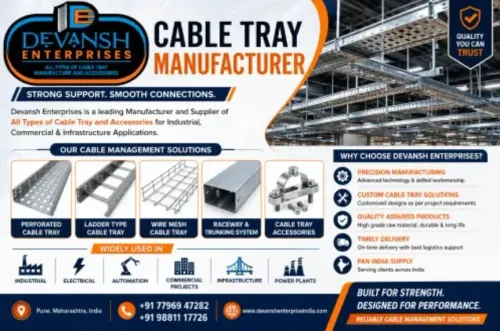
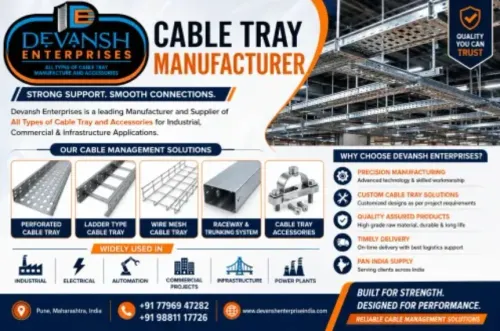
Request a signed submittal, not a catalogue page. Ask a cable tray supplier in Pune, including Devansh Enterprises, for general-arrangement drawings showing usable width, tray depth, thickness, steel grade, coating designation, splice plates, bends, riser supports and compatible accessories.
| Document or test data | What it verifies | What to check on site |
|---|---|---|
| Load-versus-span report | Mechanical capacity and deflection | Cable mass, support spacing, concentrated cleat loads and anchor capacity |
| IEC 61537 declaration and test records | Mechanical strength, electrical continuity and corrosion resistance | The declared tray, jointing hardware and finish match the supplied items |
| Bonding detail | Electrical continuity across joints and branches | Serrated washers, bonding jumpers where required, and an earth connection to the building system |
| Fire-stopping schedule | Protection at rated walls, floors and shafts | A tested seal suits the cable bundle, tray material and expected movement; oversized openings are sealed |
| Cover and accessory schedule | Protection, access and compatibility | Covers are fitted only where water, dirt, falling objects, ultraviolet exposure or contact risk justifies them |
| Installation drawings | Maintainability and structural support | Clear pulling routes, accessible joints, riser restraints, expansion provisions and no blocked inspection access |
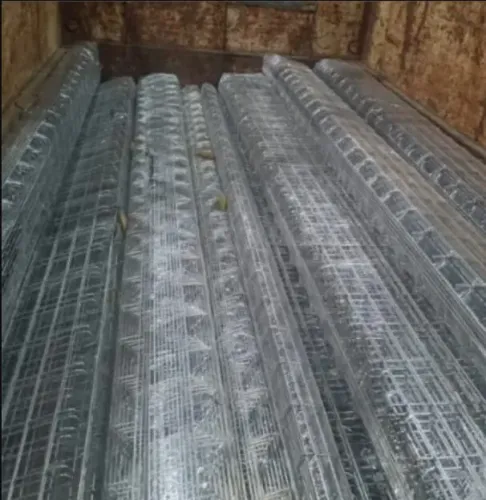
For an industrial cable tray in Pune used on a commercial project, inspect inserts, channels, anchors and slab edges before delivery; supporting steelwork can govern the design. Photograph cut edges, verify corrosion touch-up, confirm spare capacity and record every penetration seal.
IEC 61537 alignment does not by itself prove compliance with the building’s fire, electrical or structural requirements.
Related products
 | Cable Trays Manufacturers in Pune, PCMC, Maharashtra Top Cable Tray Manufacturer in Pune, PCMC and Maharashtra– Durable & Reliable Cable Management Solutions. View product → |
 | Cable Tray Manufacturer Devansh Enterprises, Pune, specializes in manufacturing high-quality cable management solutions designed for industrial, commercial, and... View product → |
Frequently asked questions
Where is cable tray practical in a Pune commercial building?
Use cable tray on accessible routes such as electrical rooms, vertical risers, service corridors, suspended ceilings, parking levels and HVAC plant rooms. It is less suitable where routes need continuous fire-rated enclosure, protection from severe impact or frequent washing.
How do you size a cable tray before ordering it?
List the cable outside diameters, add their required spacing, account for the tray’s loading limit and reserve 20–30% spare capacity. Check the manufacturer’s allowable load at the planned support spacing rather than sizing by tray width alone.
How should trays be selected for power, data and fire-alarm circuits?
Keep power, data and fire-alarm circuits separated with dedicated trays or compliant dividers. Use solid-bottom or covered containment where small cables need extra support or protection, and use ladder or perforated trays where ventilation and drainage matter.
What should you ask a cable tray supplier in Pune to provide?
Request a dimensioned drawing, material and finish specification, load table, support-spacing guidance, accessory schedule, inspection records and evidence that covers, bends, tees, reducers and earthing provisions match the installation.
Related products
 | Cable Trays Accessories Manufacturers in Pune, PCMC, Maharashtra We Devansh Enterprises are the leading cable trays manufacturers and cable tray accessories manufacturers in Pune. View product → |
 | GI Ladder Type Cable Trays Manufacturers in Pune, PCMC, Maharashtra We Devansh Enterprises are renowned as leading GI Ladder Type Cable Trays Manufacturers in Pune. View product → |
 | GI Perforated Cable Trays Manufacturers in Pune,PCMC, Maharashtra Welcome to Devansh Enterprises - one of the leading Cable Tray Manufacturer in Pune, PCMC and Maharashtra, we are leading GI Perforated cable trays... View product → |
 | Powder Coated Cable Tray Best Powder Coated Cable Tray Manufacturer In Pune PCMC All Maharashtra colour coated cable tray View product → |
Keywords