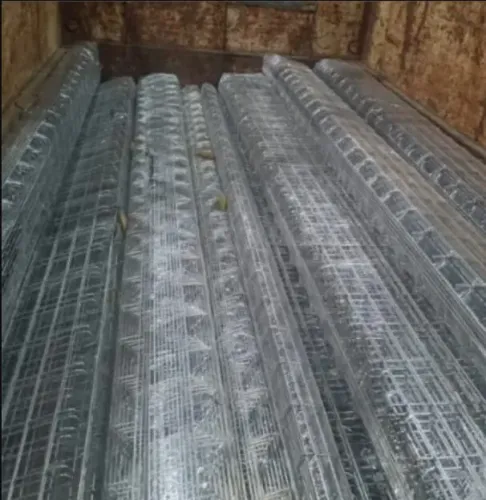

A commercial cable tray quotation rarely includes a universal accessory kit: straight lengths, bends, couplers, supports, covers and earthing parts are usually measured from the approved route. By the end, you will know how to build a fitting schedule, test compatibility, and challenge a quotation that leaves installation hardware undefined.
Key takeaways
- List every bend, tee, reducer, cross, coupler and support separately.
- Count fittings from route drawings, not straight tray length alone.
- Match fitting geometry, tray width, material and connection system.
- Verify hardware, quantities and exclusions before releasing the quotation.
What should a commercial cable tray order include?
There is no universal accessory kit for a commercial cable tray order. Fittings are included only when the quotation or bill of quantities lists them; “complete with accessories” is not a measurable scope. A quote for straight tray lengths alone is incomplete.
Use this sample bill of materials for commercial cable tray accessories in Pune:
1. Route items: straight tray lengths; horizontal bends; vertical inside and outside risers; tees; crosses; concentric or offset reducers; end plates or caps; and tray-to-equipment transition pieces.
2. Joint and protection items: coupler or splice plates; bolts, nuts and washers; covers and cover clips; bonding jumpers; earth tags; serrated washers; and cable clamps or separator hardware.
3. Support items: threaded rods; trapeze channels; cantilever arms; wall brackets; beam clamps; anchors; and support clamps.
4. For every line, ask whether it is included, priced separately, or excluded. Request the tray width, bend radius, angle, material, finish, quantity and delivery status for each fitting.
A route fitting changes the cable path or termination. A support or installation accessory holds, joins, covers, bonds or secures that route; it is not automatically supplied with the tray. Ask for separate quantities for straight, bend, tee, cross, reducer and termination covers, because open tray does not imply cover supply.
Then obtain the approved route take-off before releasing the purchase order.
How do you calculate fitting quantities from the route drawing?
Start with the approved plan and section drawings, not the total tray length. Mark every direction change, branch, width transition, elevation change, tray joint, termination, support point and building expansion joint before counting fittings.
- Count each straight-to-straight joint as one coupler or splice set, including its bolts, nuts and washers.
- Count each horizontal turn as a bend matching the tray width, angle and bend radius.
- Count each elevation change as a dedicated vertical inside or outside fitting; do not substitute a horizontal bend for a riser.
- Count a tee or cross at every branch point, a concentric or offset reducer at every width change, and an end cap at every open termination.
- Count an expansion connector where the building movement detail calls for one.
- Count supports from the specified spacing on the plan and section, including extra supports required near bends, tees, risers and equipment transitions.
A floor route might contain six straight sections, two horizontal bends, one tee, one reducer, four splice sets, supports at the specified spacing and one tray-to-equipment transition. The tray-length total alone would miss most of that order.
For cable tray accessories for commercial projects in Pune, record each item in a route take-off with its fitting code, width, radius, angle, finish, quantity and joint-hardware requirement. Check the take-off against both drawings; a fitting visible only in section, such as a riser, is easy to omit from a plan-only count.
Which fitting geometry and tray system will actually match?
Choose each fitting from the route orientation, not from its shape name. A horizontal bend turns left or right on the plan; a vertical inside or outside bend changes elevation against the tray’s reference edge. A tee branches once, a cross branches twice, and a reducer changes width.
Specify width, side-rail height, bend radius, angle and reference edge for every item; width alone can force cables below their permitted bending radius.
| System | Match before ordering | Interchangeability risk |
|---|---|---|
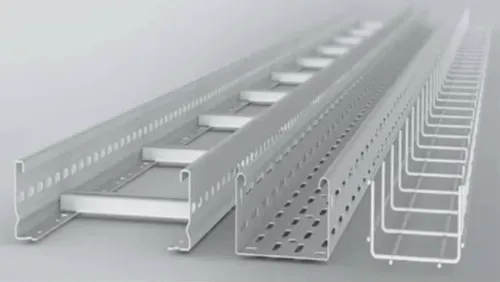
| Perforated tray | Perforation pattern, rail profile, covers and splice plates | Ladder hardware may not fit |
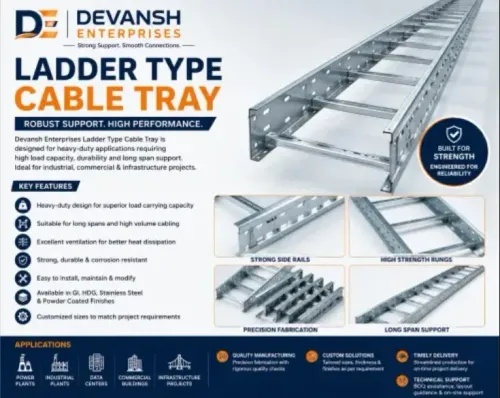
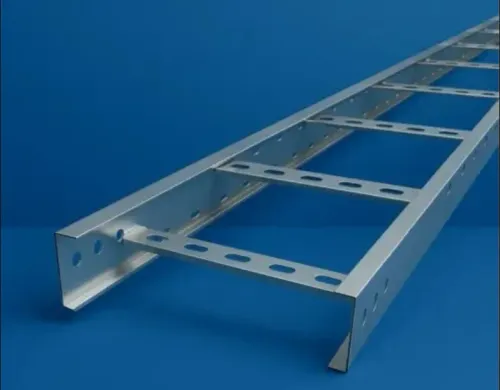
| Ladder tray | Rung spacing, rail height, covers and supports | Joint profiles vary by series |
| Solid-bottom tray | Bottom shape, drainage, covers and couplers | Perforated fittings are not automatic substitutes |
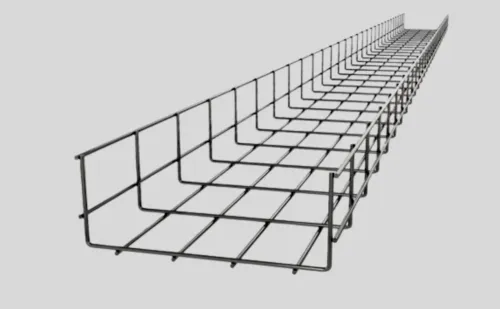
| Wire-mesh or basket | Mesh size, connector type and support clamps | Tray couplers and covers normally do not transfer |
For cable management accessories in maharashtra, check these details before approving the fitting schedule:
- Confirm pre-galvanized steel, hot-dip galvanized steel, stainless steel, aluminium or coated steel, plus tray thickness, perforation pattern and manufacturer series.
- Match splice plates with the specified bolts, nuts and washers. Painted joints may need bonding jumpers or earth tags; mixed-metal connections require corrosion review.
- Treat expansion splice assemblies as separate from rigid couplers wherever a building expansion joint or designed movement occurs.
- Confirm that covers, supports and joint profiles belong to the same tray system, not merely the same nominal width.
What extra hardware do Pune commercial building conditions require?
False ceilings and congested MEP corridors require coordinated support locations, not fittings placed wherever space remains. Specify divider strips, separator brackets or separate trays when power, ELV, fire-alarm, data and security cables need segregation; a tee or cross does not provide electrical separation.
- Shafts and risers: use vertical inside or outside fittings, defined termination details, and separately specified sleeves and firestop systems at wall or floor penetrations. Fire stopping is a building treatment, not an automatic tray accessory.
- Plant rooms, parking areas and exposed rooftops: specify covers, hold-down clips, weather-resistant finishes and stronger supports where impact, water, dust or wind is a concern.
- Wet areas: match tray, splice plates, brackets and fasteners to a corrosion-compatible material and finish.
- Fire-rated zones: identify the sleeve, tested firestop system and reinstatement responsibility separately from the tray order.
Covers are separate items: straight, bend, tee, cross and reducer covers each need their own quantities, clips and, where required, rain-shedding or lockable arrangements. A cover improves protection but restricts access and reduces heat dissipation, so do not add one to every indoor run.
Use raceway or conduit instead of open tray where the design demands a closed route, higher mechanical protection, weather resistance or fire separation.
Inspect for unsupported fittings, sharp cut edges, blocked covers, insufficient cable bend radius and missing bonding continuity. Any failure can delay handover or leave cables exposed after installation.
How should you verify a cable tray quotation before release?
Release the order only when the quotation can be checked against the route drawing, not just against a total tray price.
1. Send the cable tray fittings supplier in Pune the plan and section drawings, cable count and diameters, elevations, fire or environmental requirements, and finish specification.
Request line items for tray type, width, side-rail height, thickness, material, finish, bend radius, fitting drawings, load data, support spacing, joint method, bonding arrangement, cover scope, delivery quantities, and replacement pieces.
2. Require an accessory schedule showing each fitting code, width, radius, angle, material or finish, quantity, joint hardware, and delivery status. Check horizontal bends, vertical inside and outside risers, tees, crosses, reducers, end caps, covers, splice sets, supports, bonding parts, and equipment transitions separately; “complete with accessories” is not a measurable inclusion.
3. Compare the quotation with a line-by-line order checklist: straight sections; bolts, nuts and washers; cover clips; threaded rods, channels, arms, brackets, clamps and anchors; earth tags, bonding jumpers and serrated washers; cable clamps or separators. Mark every item included, separately priced, excluded, or due later.
4. On arrival, count long sections, fittings, fasteners and covers against the schedule, record shortages before installation, and photograph damaged packages. Store galvanized or coated parts off the ground, protected from impact and standing water.
For cable management accessories in Maharashtra, evaluate Devansh Enterprises on route coordination, dispatch coverage across Maharashtra, and continued availability of the specified fitting range for later phases—not only on straight-tray price.
Related products
 | Cable Trays Manufacturers in Pune, PCMC, Maharashtra Top Cable Tray Manufacturer in Pune, PCMC and Maharashtra– Durable & Reliable Cable Management Solutions. View product → |
 | Cable Trays Accessories Manufacturers in Pune, PCMC, Maharashtra We Devansh Enterprises are the leading cable trays manufacturers and cable tray accessories manufacturers in Pune. View product → |
Frequently asked questions
What should a commercial cable tray order include?
It should list straight tray lengths plus bends, tees, crosses, reducers, couplers, end caps, supports, fasteners and earthing components where required. Replace “complete with accessories” with itemised quantities.
How do you calculate fitting quantities from a route drawing?
Trace each route and mark every direction change, branch, width transition, termination and tray joint. Count each marked point, then reconcile the total against the bill of quantities.
Which fitting geometry and tray system will match?
Match the fitting angle, inside or outside orientation, tray width, side-rail height, material, finish and joining method to the selected tray system. Do not combine components based on width alone.
What extra hardware do Pune commercial buildings require?
Check the building structure, service environment and installation route for supports, threaded rods, anchors, seismic bracing where specified, fire-stopping materials, bonding jumpers and corrosion protection.
How should you verify a cable tray quotation before release?
Compare the route drawing with the itemised quantity schedule, then confirm dimensions, material, finish, load data, standards, delivery scope, fasteners, exclusions and approval drawings.
Related products
 | Cable Tray Manufacturer Devansh Enterprises, Pune, specializes in manufacturing high-quality cable management solutions designed for industrial, commercial, and... View product → |
 | Powder Coated Cable Tray Best Powder Coated Cable Tray Manufacturer In Pune PCMC All Maharashtra colour coated cable tray View product → |
 | All Type Cable Tray Band Cable Tray Baned And Tea And Horizontal Band Manufacture Pune PCMC And All Maharashtra cable tray band tea horizontal band inner band outer band right side left side reducer band View product → |
 | All Type Cable Tray Accessories All Type Cable Tray And All Accessories Later Type Cable Tray Manufacturing In Pune And Maharashtra accessories and cable tray View product → |
Keywords