Choosing a tray by appearance or maximum load can create problems at bends, supports, fire compartments and damp service locations. By the end, you will be able to match wire mesh with the cable route, compare it with enclosed systems, specify capacity and finish, and request documents that make a commercial installation verifiable.
Key takeaways
- Choose wire mesh for accessible routes needing visibility and future cable additions.
- Reject open mesh where cables need enclosure, impact protection or separation from contaminants.
- Size the tray for cable fill, bend radius, support spans and total cable weight.
- Specify steel grade, finish, fittings, load data and installation evidence before purchase.
Use the route, cable type and access needs as your decision test
A wire mesh cable tray is suitable for a commercial route in Pune when the route is accessible, the cables need visibility or future additions, and the environment does not demand an enclosure.
It fits indoor ceiling voids, suspended service corridors, data rooms and network routes where technicians can inspect cables and add new ones from above. It is a weaker choice outdoors, in wash-down areas, near vehicle movement, or wherever falling objects, heavy dust or water require closed protection.
Use this decision test:
- Route: Choose wire mesh for an accessible ceiling or service zone. Reject it where the route crosses a fire-rated barrier without a designed fire-stopping detail, or where impact protection is unavoidable.
- Cable type: Confirm the tray suits the cable group and separation plan. Power, control, instrumentation, fire-alarm and data cables may need separate trays, spacing or screened containment; one basket cannot solve electromagnetic interference.
- Access: Choose it when frequent additions, identification and inspection matter. Use raceway or conduit when tamper resistance, concealment or sealed protection matters more.
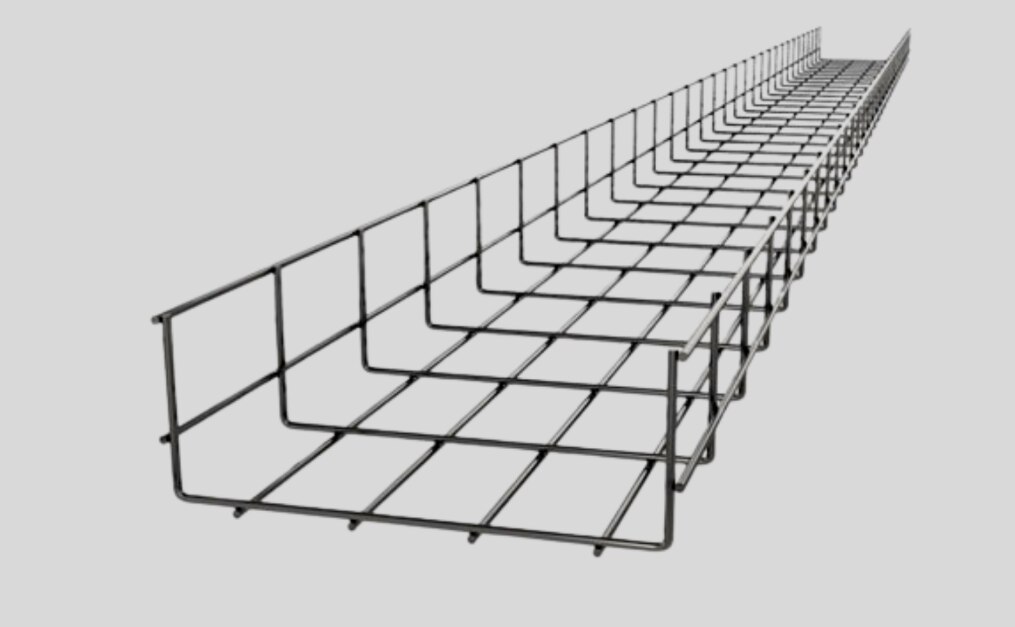
For wire mesh cable tray in Pune, do not approve “basket tray” as a complete specification. State wire diameter, mesh opening, depth, connector type, working load and support span, then request IEC 61537 evidence and the load/span table. A neat-looking locally made basket can still have unverified weld strength, continuity or corrosion performance.
Compare open mesh with perforated tray, ladder tray, raceway and conduit
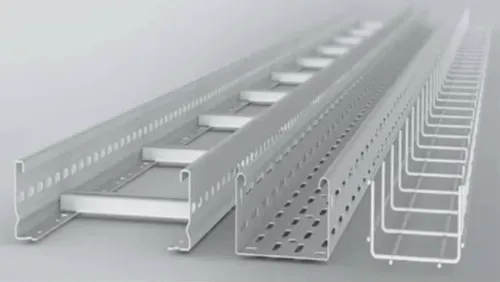
For accessible indoor commercial routes, open mesh usually gives the best balance of ventilation, visibility and quick maintenance access. It is weaker where cables face impact, falling debris, dust, wash-down water or a requirement for a closed enclosure.
| Option | Ventilation and access | Protection and appearance | Best fit |
|---|---|---|---|
| Open mesh | Excellent airflow; cables drop in and remain visible | Limited impact and contamination protection; neat above ceilings | Data, control and telecom routes needing frequent additions |
| Perforated tray | Good airflow; cables are accessible from above | Better base support and modest shielding; clean industrial appearance | Mixed power and control runs with moderate protection needs |
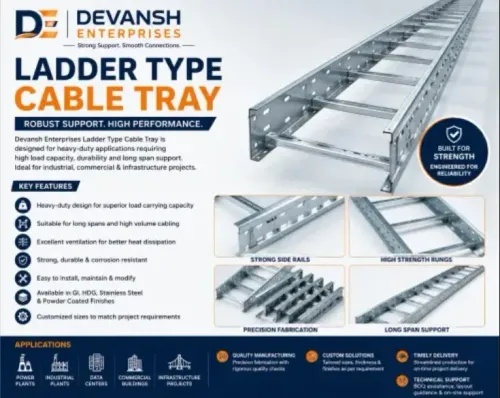
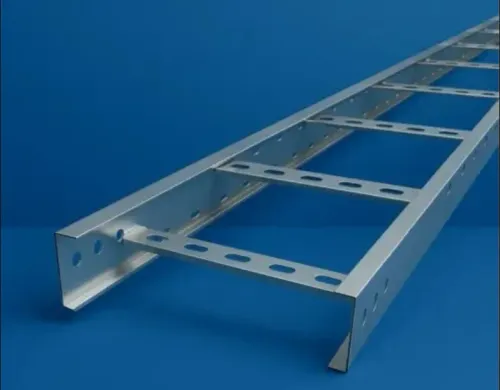
| Ladder tray | Excellent airflow and long-span strength; access is open | Lowest protection for small cables; utilitarian appearance | Heavy power cables and plant-room routes |
| Raceway | Limited ventilation; opening the cover is required for changes | Strong protection and the cleanest appearance | Public-facing areas, risers and routes needing enclosure |
| Conduit | Minimal ventilation; every cable pull requires access planning | Highest individual cable protection, but additions are slow | Short drops, exposed sections and mechanically vulnerable routes |
Choose perforated tray or raceway when dust, impact or appearance outweighs ventilation. Choose conduit for short protected sections, not a long route that will need repeated cable additions. Separate power, data, fire-alarm and instrumentation services where EMC or fire strategy requires it.
For a basket type cable tray in Pune, specify wire diameter, mesh opening, depth, connector, span and working load; “basket” alone proves nothing. Ask for IEC 61537 evidence, and match the finish to the location rather than assuming an indoor finish suits monsoon-exposed areas.
Size the tray from cable fill, bend radius and support-span loading
Cable fill gives the starting width, but bend radius and span loading decide whether that width works in the installed route. For a wire mesh cable tray for commercial projects in Pune, use the following procedure before requesting a quotation.
1. List every cable by type, outside diameter, quantity and mass per metre. Add the diameters to obtain the occupied width, then divide by the project’s specified fill limit. Add the required spare percentage separately; do not disguise future capacity inside the fill calculation.
2. Check the largest cable’s minimum bend radius at every bend, tee, cross, reduction and drop. Select fittings whose internal radius meets that cable value, then confirm the tray depth and clear width leave room for the bend without crushing fibre, data or armoured cables.
3. Calculate working load in kg/m by adding the installed cable masses and the planned spare-cable allowance. Include concentrated loads from vertical drops, heavy power cables and accessories. Do not use a maximum load figure without its test span.
4. Match the calculated load and tray width to the manufacturer’s IEC 61537 load-versus-span table. Choose support spacing from that table, then check splice positions, cantilever brackets, ceiling anchors and the heaviest loaded section. A longer span can reduce permissible load sharply.
5. Record the selected width, depth, fill basis, spare capacity, cable bend radius, working load, support spacing and coupler arrangement on the purchase specification. Ask for the tested load/span data, not only a kilograms-per-metre claim.
Select steel, finish and corrosion protection for Pune conditions
For wire mesh cable tray in pune, select the finish from the route’s exposure, not from the word “basket.” A dry, conditioned office or data room can use pre-galvanized steel. Monsoon-damp parking areas, rooftops and external service routes need stronger protection, while chemical rooms require a coating or metal proven compatible with the actual chemicals.
| Finish | Suitable location | Main risk to control |
|---|---|---|
| Pre-galvanized steel | Dry indoor ceilings and service corridors | Welds and cut ends lose zinc protection; treat exposed steel |
| Hot-dip galvanized after fabrication | Damp plant rooms, semi-open parking and outdoor routes | Specify ISO 1461; control drainage, venting, distortion and tolerances |
| Stainless steel | Chemical exposure, persistent humidity or aggressive cleaning | Confirm grade compatibility with chemicals and fasteners |
| Paint system over prepared steel | Defined chemical or appearance requirement | Specify pretreatment, coating build and repair method; damage exposes steel |
Hot-dip galvanizing after fabrication protects welds and cut edges more consistently than pre-galvanized wire. Do not accept “galvanized finish” alone; require the process, coating specification and inspection record.
- Provide drain paths so rain or wash water cannot sit in the tray.
- Match bolts, nuts, washers and connectors to the tray metal; incompatible metals can accelerate galvanic corrosion.
- Repair every cut edge according to the coating specification before energising cables.
- Reject an uncovered tray where falling debris, impact or wash-down is expected; use a cover, guarding or an enclosed system.
Specify the tray system, installation details and evidence before purchase
Approve the system only after the quotation proves how it will perform on your route, not merely how the basket looks. A drawing that says “basket tray” leaves wire diameter, mesh opening, load capacity, electrical continuity and support requirements unresolved.
1. Ask for an IEC 61537 product-standard declaration and the supporting test report. Check that the tested configuration matches the quoted tray depth, wire diameter, mesh opening, connector and finish.
2. Request a load-versus-span table showing working load at each proposed support spacing. Confirm maximum span, deflection limits, allowable cable weight, cantilever limits and the manufacturer’s method for fixing bends, tees, reducers and vertical drops.
3. Require an installation schedule identifying supports, splice plates, bonding jumpers, fastener grades, minimum bend clearances and cable-entry protection. Confirm whether field-cut ends need zinc-rich repair coating and whether the tray must be bonded to earth.
4. Specify the finish in writing: pre-galvanized steel, hot-dip galvanized after fabrication to ISO 1461, stainless steel or a named paint system. For monsoon-exposed or wash-down areas, demand evidence covering drainage, cut-edge protection and fastener compatibility.
5. Request the accessory schedule, batch or inspection records, continuity or splice-resistance information and warranty exclusions. Reject a locally fabricated lookalike with no weld, coating or load evidence.
A wire mesh cable tray manufacturer in Pune, including Devansh Enterprises, should answer these points directly. A commercial cable tray supplier in Pune should attach the documents to the purchase order, so substitutions cannot quietly change the approved system.
Related products
 | Basket Type Cable Tray Wire Mesh Cable Tray Manufacturing In Pune PCMC And All Maharashtra basket type cable tray band and accessories View product → |
 | Wire Mesh Cable Tray Best Manufacture Basket Tray And All Accessories Pune PCMC And All Maharashtra wire mesh cabal tray SS 302/202/MS View product → |
Frequently asked questions
When is wire mesh cable tray suitable for a commercial project in Pune?
Use it on accessible routes where cable visibility, ventilation and future additions matter, and where cables do not need a fully enclosed raceway or conduit.
How does wire mesh compare with perforated tray, ladder tray, raceway and conduit?
Wire mesh provides visibility and ventilation; perforated tray gives a more continuous base; ladder tray suits larger, heavier cables; raceway and conduit provide greater enclosure and protection.
How do you size a wire mesh cable tray?
Calculate cable fill, allow each cable to meet its bend-radius requirement, and check the tray’s support-span loading against the total cable weight.
What steel and corrosion protection suit Pune conditions?
Select the material and finish according to indoor or outdoor exposure, humidity, chemical contact and installation location, then verify the stated coating or stainless-steel grade.
What should you specify before buying a wire mesh cable tray?
Specify tray dimensions, mesh, material, finish, fittings, support spacing, load capacity, cable segregation, bonding requirements and test or product evidence.
Keywords