Junction boxes can create repeat sales, project pull-through and urgent maintenance orders, but a broad shelf of mismatched enclosures ties up working capital. You will be able to estimate a practical Pune stock range, compare junction boxes with adjacent product categories and set counter-level selection rules that protect margin and customer outcomes.
Key takeaways
- Stock standard enclosure-and-gland combinations with repeat local demand.
- Separate fast-moving sizes from custom drilling and hazardous-area requirements.
- Use sales history, lead times, and minimum order quantities to set stock ranges.
- Confirm material, ingress rating, dimensions, glands, terminals, and mounting before quoting.
When junction boxes earn shelf space beyond cable trays
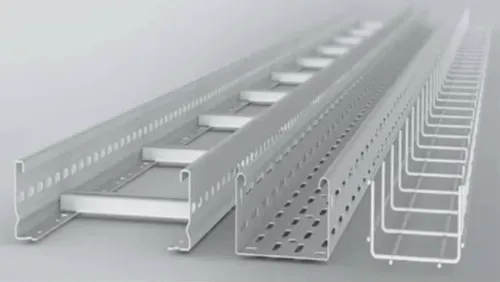
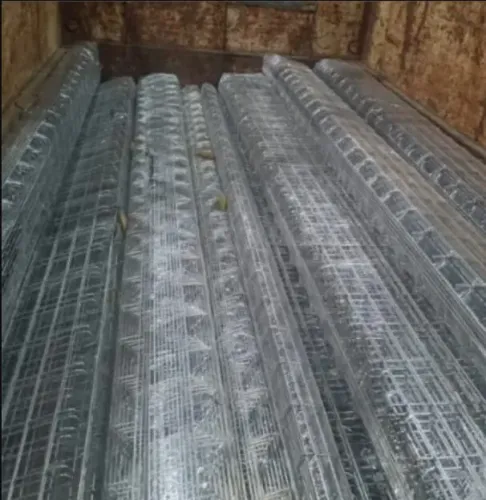
Stock junction boxes when local customers repeatedly buy standard enclosure-and-gland combinations. A compact range can turn alongside cable trays, while unusual dimensions, custom drilling and hazardous-area equipment belong to quoted or order-based procurement. Cable trays win larger projects, but they do not solve every point-to-point connection.
- Recurring work: industrial control panels, motor connections, building-services wiring and machine wiring create repeat demand for standard boxes, glands and terminals.
- Project pull-through: cable-containment installations need junction points, branches and equipment connections beyond the tray route.
- Emergency replacement: damaged covers, cracked enclosures and water ingress create urgent orders during plant repairs or monsoon failures.
- Maintenance packages: customers need a complete box, glands, blanking plugs, earth terminals and mounting hardware quickly, not an empty enclosure that requires another purchase.
The working-capital test is simple: repeatable sizes turn; one-off variants age. Junction boxes for electrical distributors in Pune are worth stocking when this pattern is visible in order history, not when every customer specifies unique dimensions or certification needs.
| Option | Commercial strength | Limitation |
|---|---|---|
| Junction boxes | Complete point-to-point solution with accessory sales | Needs disciplined size and IP-range selection |
| Cable trays | Strong pull-through for large projects | Does not satisfy every connection point |
| Conduit accessories | Faster, smaller-ticket movement | Less enclosure value per order |
| Terminal enclosures | Suits organised terminations | Not every splice or branch needs terminals |
| Made-to-order boxes | Minimises dead stock | Loses urgent-order speed and convenience |
How to calculate a Pune stock range without overbuying
Use twelve months of sales and quotation data before setting a Pune stock range. As a junction boxes supplier in Pune, separate demand from industrial maintenance, panel builders, contractors, commercial building services and outdoor utility customers.
1. Record each repeat requirement by nominal size, actual internal length, width and depth, enclosure material, IP rating, entry pattern and accessory combination.
2. Build the core range around repeated combinations, not cosmetic variants. Stock matching cable glands, blanking plugs, reducers, earth terminals, mounting feet, DIN rail or terminal supports and spare gaskets; an empty box without compatible accessories is an incomplete sale.
3. Set each SKU’s reorder point as average demand during supplier lead time plus a deliberate emergency-work buffer. Include minimum order quantity, batch traceability and replacement availability before approving the quantity.
4. Review the reorder point after monsoon demand, major project awards and plant shutdown periods. Track days on hand, ageing and lost sales separately so one urgent order does not disguise stagnant stock.
5. Use a different rule for slow-moving stainless-steel, custom-entry or hazardous-area boxes than for standard plastic IP-rated boxes. Procure the former against verified demand instead of applying the standard replenishment formula.
6. Start with a small trial range. Expand only when the same size, entry pattern and accessory set repeats across customers; otherwise, quote or schedule procurement rather than tying up working capital.
A box that sits for months is not the only warning sign. Repeated lost sales for one gland pattern or missing gasket shows where the next stock addition belongs.
What the customer is actually asking for at the counter
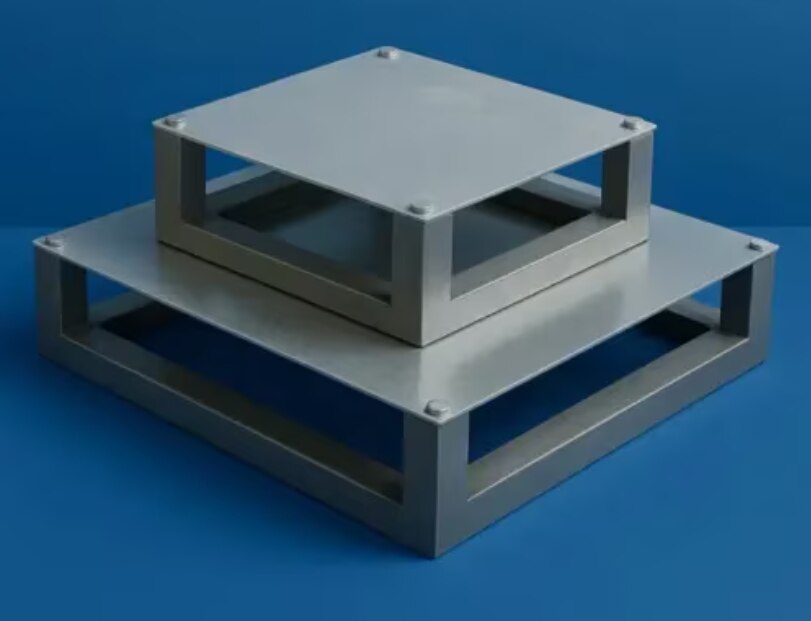
At the counter, identify the function before quoting the enclosure: a junction box houses cable joints or branch connections, while similar terms describe different work.
1. Recommend a junction box for passive splices and accessible branch connections. Ask whether the customer needs only insulated joining connectors, glands and a sealed cover; if so, do not quote a terminal enclosure by default.
2. Recommend a pull box when conductors must be drawn, redirected or inspected during installation. Size it for cable routing, bend radius and pulling space, not merely for the number of terminals it can hold.
3. Recommend a terminal box when the assembly uses terminal blocks, earth terminals, disconnect terminals or fuse terminals with conductor identification. Check voltage, current, conductor cross-section, creepage, clearance, temperature rise and short-circuit conditions before calling any empty box terminal-ready.
4. Treat an electrical enclosure as the broader category for relays, fuses, sensors, barriers or control components. It can require heat-dissipation calculations and assembly documentation. An inspection box provides examination or maintenance access; it does not automatically replace a sealed connection enclosure.
5. Separate ordinary industrial boxes from flameproof or increased-safety boxes for classified hazardous locations. Ask for the protection concept, gas or dust group, temperature class, certified glands and installation documents. Never substitute an ordinary IP65 box.
This distinction stops an industrial junction box in Pune from becoming one interchangeable SKU. A passive splice box, terminal assembly and control enclosure need different stock codes, accessories and compliance evidence.
The selection checks that prevent an expensive wrong box
A box that fits the shelf can still fail after installation. Select it from the installed cable arrangement, not its nominal outside size.
1. Ask for internal length, width and depth; cable count and outer diameters; entry positions and sizes; gland thread type; terminal dimensions; bend radius; gland locknut space; earthing hardware; and spare capacity for future conductors. An undersized box crushes bends, blocks inspection, raises heat and makes rework unsafe.
2. Match material to the site. Polycarbonate or ABS reduces weight and many corrosion concerns. Aluminium or stainless steel improves mechanical robustness, heat dissipation and shielding, but requires attention to bonding, galvanic action and corrosion selection. GRP suits demanding environments.
3. Confirm the cover type, gasket material, mounting method, operating temperature, ultraviolet exposure, condensation, dust, chemicals and monsoon moisture. IP ratings under IEC 60529 are not interchangeable: IP66 covers powerful water jets, while IP67 covers temporary immersion. IP67 alone does not prove washdown suitability.
4. Treat the rating as valid only for the tested configuration. Extra drilled holes, unmatched glands, open entries or a changed gasket can defeat it. Match each gland’s thread, cable range, seal and armour-clamping method.
Use IEC 62208 evidence for an empty low-voltage enclosure, then request the separate assembly basis when terminals or equipment are installed.
Oversizing increases price and shelf space, so compact dimensions matter where mounting space is tight or the customer pays for them. Get the internal drawing before ordering, not after the installer reports a blocked cover.
How a Pune distributor can turn a stock decision into a reliable offer
Make the final stocking decision from documented fit and supplier performance, not a search result. The phrase junction box manufacturer in pune identifies a search term, not proof of local manufacture or certification.
Require a current datasheet for the exact material, size and enclosure family. Check that it states:
- Internal dimensions, declared impact rating, operating temperature range and gasket material
- Compatible gland threads, cable-entry options and earthing provisions
- The test basis for the claimed IP performance, plus test reports or certificates
- Batch traceability and compatibility with glands, reducers, blanking plugs and terminals
Confirm that standard boxes, terminal-ready variants, glands, reducers, blanking plugs, earth terminals, mounting hardware and replacement gaskets are available together. A box that needs a second purchase is not an emergency-ready offer.
Devansh Enterprises can enter the comparison when its standard enclosure range, cable-entry options and matching cable-containment products fit repeated demand; compare its documentation, lead times, fill rates and replacement support with other suppliers.
| Decision signal | Commercial action | Reason |
|---|---|---|
| Documented core range turns repeatedly | Stock it | Supports complete orders and emergency replacement |
| Unproven variant ages on the shelf | Do not replenish | Ties up working capital without repeat demand |
| Certified hazardous-area or custom-drilled box | Schedule procurement | Certification or drilling must match the order |
Keep hazardous-area products and custom-drilled boxes out of dedicated stock until verified demand supports them. The answer is yes when compatible accessories complete orders repeatedly; it is no when customers cannot install the stocked box without buying elsewhere.
Related product
 | Junction Box Manufacturers in Pune,PCMC,Maharashtra We Devansh Enterprises - one of the leading and largest Junction Box manufacturers Pune. View product → |
Frequently asked questions
When should an electrical distributor stock junction boxes instead of ordering them?
Stock junction boxes when customers repeatedly buy standard enclosure-and-gland combinations and the products sell alongside cable trays. Quote unusual dimensions, custom drilling, and hazardous-area equipment.
How can a Pune distributor calculate a junction box stock range?
Review recent sales by size and specification, then account for supplier lead time, minimum order quantities, project demand, and the cash tied up in slow-moving stock.
What do customers usually mean when they ask for a junction box?
Clarify the enclosure material, dimensions, IP rating, cable-entry arrangement, gland size, terminal requirement, mounting method, and indoor or outdoor installation.
Which checks prevent ordering the wrong junction box?
Match the box to the required IP rating, material, dimensions, wall thickness, cable glands, terminals, drilling pattern, temperature exposure, and hazardous-area classification.
Keywords