A damaged ladder tray is not automatically a replacement job: a loose rung and a load-bearing side rail failure demand different decisions. By checking structural condition, coating damage, cable safety, bonding, and replacement compatibility, you can approve the right work scope before crews disturb an installed route.
Key takeaways
- Replace sections with perforation, cracked welds, or unsafe loss of metal.
- Check tray thickness, loading, span length, supports, bonding, and corrosion spread.
- Isolate and support cables before cutting, drilling, or removing an installed tray.
- Specify width, thickness, finish, load, span, fittings, and test documents.
Repair or replace? Classify the defect before touching the cables
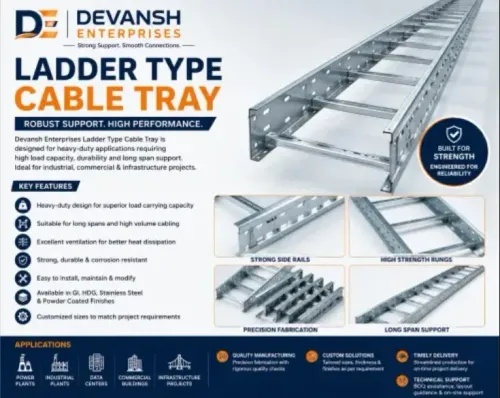
Do not judge a GI ladder tray by rust colour alone. The right scope for gi ladder for tray repair in pune depends on remaining metal thickness, tray loading, span length, support condition, and the defect’s location.
1. Record a local repair when the steel remains sound and the defect is limited to a loose or missing rung, isolated fastener, minor coating loss, or a damaged splice plate. Clean surface rust, remove burrs, replace compatible hardware, and restore zinc protection to cut edges.
Confirm the repair does not reduce cable clearance or bend-radius space.
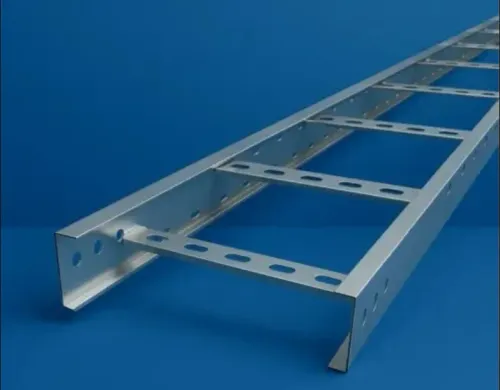
2. Specify a new span when a side rail is perforated, buckled, or permanently distorted; a rung is cracked or detached; a splice plate is twisted; bolt holes are elongated; or a weld has separated. Replace the complete affected length rather than patching a load-bearing member.
Support or secure the cables before removing the old section.
3. Replace the complete run when corrosion recurs after cleaning, several spans have section loss, supports have moved or failed, tray alignment is lost across multiple joints, or the damage reduces power-control separation. A thickness survey and load review are stronger evidence than appearance.
Before cutting, identify whether the tray was pre-galvanized or hot-dip galvanized after fabrication. Cutting or drilling pre-galvanized steel exposes bare edges, so specify zinc-rich edge treatment; also inspect bonding jumpers, splice continuity, protruding bolts, sharp edges, and reduced clearance before energisation.
What to check during a Pune ladder tray maintenance inspection
Use measurements, not rust colour, to decide whether a ladder tray remains suitable. During ladder cable tray maintenance in Pune, inspect after the monsoon and after construction or process changes.
Record tray width, side-rail and rung thickness with an ultrasonic gauge, support spacing, tray level, straightness, visible deflection, cable clearance, and cable weight against the manufacturer’s span and load data.
Photograph every measurement with a scale, plus:
- Cut edges, splice joints, welds, bolt holes, rungs, supports, and any perforated rail.
- Standing water, blocked drainage, debris, damaged covers, sharp edges, and cable abrasion.
- Each support attachment and fastener, including loosened, missing, cracked, or corroded hardware.
- A long view of the run and close views of tray movement, buckling, separation, or reduced cable clearance.
Check continuity between tray sections and to the protective bonding conductor with a recorded low-resistance test; use the project specification for the acceptance value. A clean-looking tray can still fail at an electrically discontinuous splice.
| Finding | Measurement or photograph | Decision significance |
|---|---|---|
| Surface rust | Thickness readings show no section loss; close-up shows intact metal | Clean and coat after checking the cause |
| Corroded rail or rung | Readings show reduced thickness, holes, or cracked attachments | Replace the affected section |
| Distorted span | Level, straightness, support spacing, and deflection records show movement | Review load and support replacement |
| Failed splice | Misalignment, elongated holes, missing bolts, or failed continuity | Replace hardware or the span |
| Sharp edge or abrasion | Close photograph shows contact with cable insulation | Remove the hazard before energisation |
How to repair an installed tray without creating a cable hazard
Do not loosen a damaged span until the cables beneath it are supported independently. Isolate affected circuits where required, establish access controls, and confirm that temporary supports will maintain each cable’s minimum bend radius and separation.
1. Photograph the defect, identify power and control circuits, and mark the cables that will move. Record the tray size, support locations, and bonding connections before dismantling anything.
2. Install temporary supports or secure the cables to a suitable support system. Transfer the cable load gradually; never let cables hang from their insulation, glands, or adjacent fittings.
3. Remove the damaged span, rung, splice plate, or fasteners without dragging cables across cut metal. If corrosion or impact has reduced a side rail’s load capacity, replace the span rather than forcing it straight.
4. Fit compatible tray sections and splice hardware. Align side rails and rungs, engage each splice fully, and tighten fasteners to the supplier’s specified torque.
5. File or replace any cut edge with a burr, and turn protruding bolts away from the cables. Restore covers, separation, and clearance around power and control circuits before releasing temporary supports.
6. Reconnect the bonding path across the repaired section. Verify continuity across painted interfaces, discontinuous fittings, expansion joints, and replacement sections, adding bonding jumpers where the engineered design or applicable code requires them.
7. Inspect the finished span for sag, movement, loose hardware, sharp edges, cable abrasion, and inadequate support. Recheck cable position and bend radius, then remove temporary supports and energise only after the responsible electrical authority accepts the repair.
How to specify a compatible replacement span or a different containment type
A compatible span is defined by more than its width. Measure the existing tray before ordering GI ladder tray replacement in Pune, because a visually similar section can have different load capacity, splice holes, or side-rail geometry.
- Record the clear internal width, side-rail height and thickness, overall span length, rung spacing, rung diameter, and the distance between supports.
- Photograph both splice joints, then measure splice-plate length, bolt diameter, hole spacing, and hole position from the rail edge. Check whether the tray is pre-galvanized or hot-dip galvanized after fabrication.
- Record cable weight, spare capacity, cable clearance, support deformation, and any change in level or alignment. Include bonding connections and continuity across the replacement joint.
- Reject a cosmetic match if the side rail is buckled, holes are elongated, welds are separated, or the new section cannot transfer load through the side rails. Specify matching material, coating class, rung spacing, accessories, and rated support span.
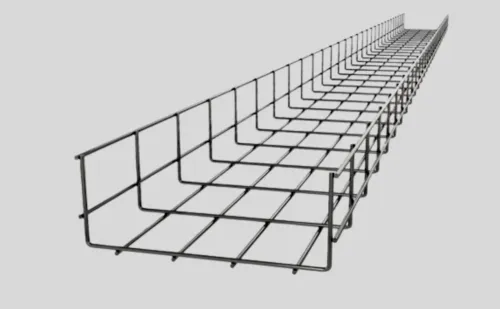
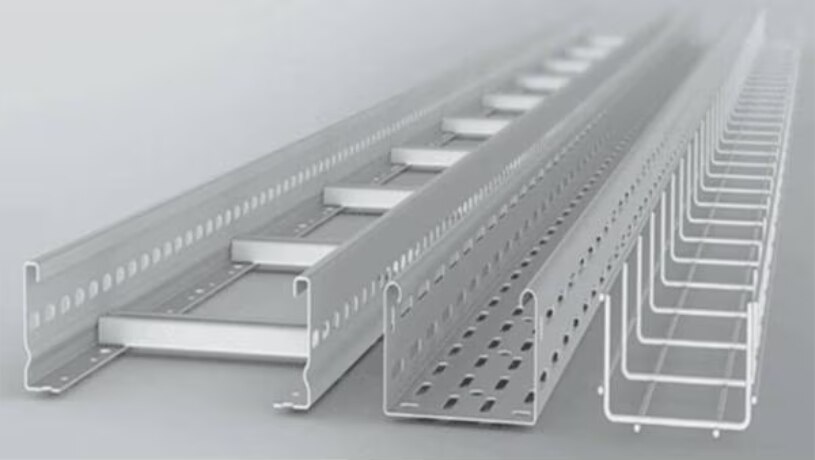
Choose the containment type by the installation risk, not by appearance.
| Option | Better choice when | Check before changing |
|---|---|---|
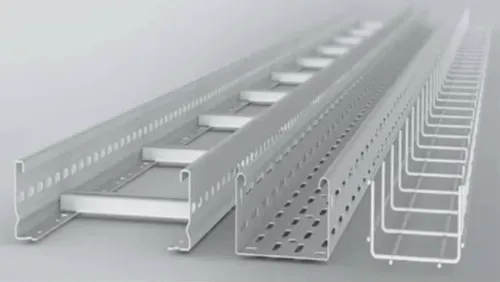
| Ladder tray | Heavy power cables need ventilation and easy visual access | Cable support, separation and mechanical protection |
| Perforated tray | Smaller or mixed cables need continuous bottom support and frequent branch-offs | Heat dissipation, fill and cable bending space |
| GI raceway | Cables need enclosed protection from impact, dust or tampering | Removable covers, internal fill, heat buildup and access for future work |
What to include in a Pune tray replacement scope and supplier submittal
A metre rate hides the expensive work. In a congested Pune riser, temporary cable support, shutdown coordination, access equipment and reinstatement can exceed the replacement tray cost, so request one itemised scope rather than a material-only quotation.
Require each GI cable tray supplier in Pune to include:
- Site access, isolation or shutdown assumptions, temporary cable supports, dismantling and disposal of corroded steel
- Tray length, width, height, steel thickness, rung and side-rail construction, coating process and applicable standard
- Support spacing, permissible spans, rated load, splice plates, fasteners, bends, tees, reducers and end fittings
- Labour, lifting, transport, touch-up coating, bonding jumpers, continuity testing and cable reinstatement
- Corrosion-repair instructions, delivery schedule, warranty exclusions and drawings showing the replacement interface
Compare quotations on the same basis:
| Quote type | What it includes | Cost risk |
|---|---|---|
| Material-only | Tray and standard accessories per metre | You pay later for access, labour and temporary support |
| Installation scope | Materials, removal, fitting, disposal and testing | Check shutdowns, lifting and reinstatement exclusions |
| Engineered submission | Load data, bonding details, drawings and complete work package | Higher initial price, fewer design and change-order gaps |
Ask Devansh Enterprises to separate tray, fittings, labour and testing in the bill of quantities. Confirm that metallic continuity is not being treated as protective earthing without a designed bonding arrangement.
Related products
 | GI Ladder Type Cable Trays Manufacturers in Pune, PCMC, Maharashtra We Devansh Enterprises are renowned as leading GI Ladder Type Cable Trays Manufacturers in Pune. View product → |
 | GI Perforated Cable Trays Manufacturers in Pune,PCMC, Maharashtra Welcome to Devansh Enterprises - one of the leading Cable Tray Manufacturer in Pune, PCMC and Maharashtra, we are leading GI Perforated cable trays... View product → |
Frequently asked questions
Should you repair or replace a GI ladder tray?
Classify the defect first. Replace the section when corrosion has perforated the steel, welds or rungs are cracked, holes have weakened the side rails, or the tray can no longer carry its designed load. Repair minor surface corrosion only after confirming adequate remaining thickness, sound supports, and safe cable loading.
What should a Pune ladder tray maintenance inspection check?
Record remaining metal thickness, corrosion location and spread, tray width and span, cable loading, side rails, rungs, couplers, supports, anchors, bonding jumpers, covers, and clearances. Check for water retention, chemical exposure, loose hardware, sharp edges, and unsupported cable weight.
How do you repair an installed ladder tray without creating a cable hazard?
Plan isolation and access before work starts. Support cables with temporary slings or a designed temporary support, protect insulation from sharp edges, control falling debris, and avoid cutting or drilling while cables remain unsupported. Reinstate couplers, bonding, edge protection, and support spacing before removing temporary supports.
How do you specify a compatible replacement ladder tray span?
Match the existing width, side-rail height, steel thickness, finish, rung spacing, coupler arrangement, support span, and required load. Check the replacement against cable fill, future capacity, bend radius, vertical offsets, clearances, earthing continuity, and the available fittings.
What belongs in a GI ladder tray replacement scope and supplier submittal?
Include drawings and measurements, removal limits, cable support and isolation steps, tray dimensions, material and finish, design load, support spacing, fittings, bonding details, corrosion protection, installation method, inspection records, and product test or material documents.
Related products
 | Cable Tray Manufacturer Devansh Enterprises manufactures high-quality Ladder Type Cable Trays designed for heavy-duty cable management applications in industrial,... View product → |
 | Cable Tray Manufacturer Devansh Enterprises, Pune, specializes in manufacturing high-quality cable management solutions designed for industrial, commercial, and... View product → |
 | Cable Trays Manufacturers in Pune, PCMC, Maharashtra Top Cable Tray Manufacturer in Pune, PCMC and Maharashtra– Durable & Reliable Cable Management Solutions. View product → |
 | GI Raceways Manufacturers in Pune, PCMC, Maharashtra We are the leading and best manufacturer of Cable Trays in Pune PCMC and Maharashtra. We are also one of leading GI raceways manufacturers in Pune. View product → |
Keywords