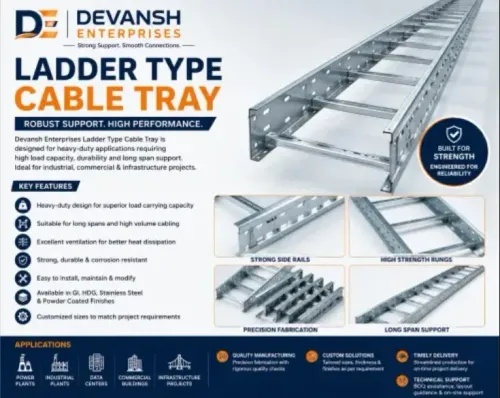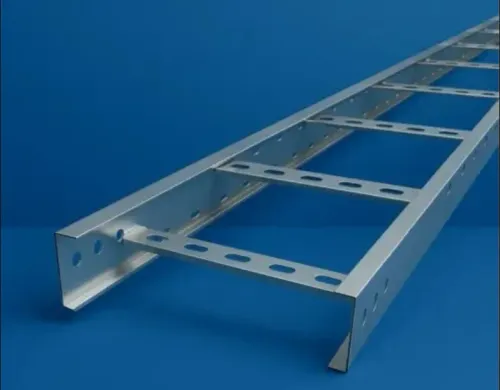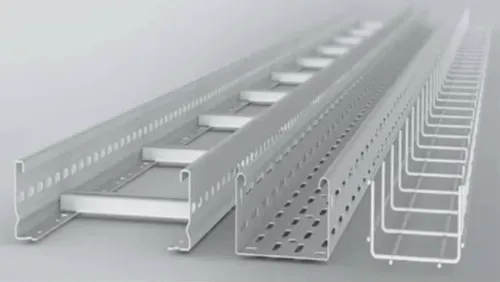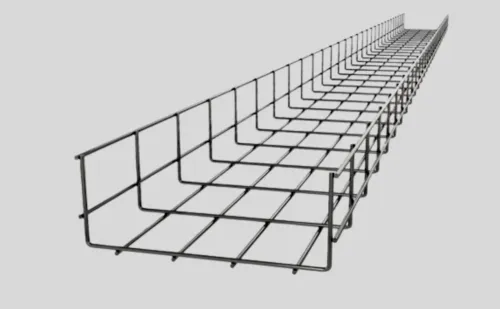
A loose bolt, bent rung or damaged galvanizing does not automatically require a new tray, but a buckled side rail or widespread pitting can make a patch unsafe. You will be able to inspect the route, test its remaining capacity, compare the full work effort and specify a replacement that fits the existing cables and supports.
Key takeaways
- Choose repair only when rails, anchors and adjacent sections remain structurally sound.
- Inspect splice plates, bolts, rungs, brackets and supports before disturbing cables.
- Replace sections when damage reduces capacity, fit or support-system integrity.
- Compare access, cable handling, testing and downtime—not just the quoted material price.
Use structural capacity, not appearance, to choose repair or replacement
Identify the damaged component, its structural role, the cable load it carries and whether the defect is local or continuous. A loose splice plate, missing bolt, bent rung, damaged bracket, isolated coating failure or short deformed section can justify repair when both side rails, anchors and adjacent sections remain sound.
| Option | Structural evidence | Decision |
|---|---|---|
| Repair | Damage is local; rails, anchors and supports remain sound; cable load stays within verified capacity | Repair the component and confirm the load path |
| Replace | A rail is cracked or buckled, perforations have enlarged, supports have failed, corrosion has reduced steel, or the tray sags permanently between supports | Replace the affected section or the complete run after engineering review |
Check the latest route drawing against the installation’s original load-versus-span basis before choosing. Added cables, heavier cables, altered support spans and water accumulation can increase demand, so verify the manufacturer’s load table and inspect the supporting steel or concrete.
A visually similar section is not interchangeable: match material, coating, side-rail depth, rung spacing, load class, splice design and compatible fittings. This structural-capacity test is the starting point for ladder cable tray repair or replacement in Pune.
Inspect the failure points before cleaning or touching the cables
Record the tray’s safe condition before cleaning, moving cables or removing loose material. In ladder cable tray maintenance in Pune, cleaning first can erase active corrosion evidence needed to judge residual structural capacity.
1. Isolate the work area and follow the site permit and electrical isolation procedure before anyone works near the tray. Obtain the latest cable route drawing, cable schedule and previous inspection records.
2. Photograph and measure each defect before removing dust, rust or loose coating. Inspect side rails, rungs, splice plates, bolts, supports, anchors, bonding jumpers and clearances at outdoor horizontal runs, roof penetrations, low points, tray ends and dissimilar-metal interfaces.
3. Classify corrosion as surface oxidation, damaged galvanizing, deep pitting, or corrosion concentrated at joints and cut edges. Surface oxidation may need preparation and approved coating restoration; lost steel section requires an engineering decision, not paint.
4. Record tray width and depth, side-rail height, support span, cable fill, cable weight, bend radius, access clearance and spare capacity. Note standing water, trapped industrial dust, missing hardware, failed anchors and any cable contact with sharp or deformed metal.
The record must show photographs, measurements, defect locations and surrounding support conditions. Do not disturb the cables until the inspection establishes whether the damage is cosmetic, local or structural.
Repair local defects without loading the tray or exposing cables to new hazards
A repair is safe only when the defect is local, the side rails, anchors and adjacent sections remain sound, and an engineer has verified the repair’s load path. Use a qualified electrical contractor and follow the site’s isolation, permit-to-work and lockout procedures; work under live cables is not ordinary fabrication.
For ladder cable tray repair or replacement in Pune, include these controls:
- Install rated temporary supports before disturbing the tray. Protect cable bend radius, jackets and terminations; never leave cables hanging from a damaged rung, splice plate, gland or adjacent conduit.
- Replace missing fasteners with compatible hardware. Reinforce a short damaged section only after checking its load path, and replace a bent rung only when both side rails remain sound.
- Prefer engineered bolted repair plates or a replacement section over field welding. Cutting, drilling or welding galvanised steel creates sharp edges, metal swarf, coating damage, hot-work and fire risks near cables.
- Deburr every cut edge and drilled hole. Apply zinc-rich repair coating only when the project specification or manufacturer data permits it and states surface preparation and application requirements.
- Do not treat coating restoration as structural repair: it cannot replace steel lost to pitting or straighten a buckled rail.
- Restore bonding across every splice and test electrical continuity after repair. Paint, sealant, corrosion products and nonconductive washers can interrupt contact.
This approach keeps ladder cable tray maintenance in Pune focused on controlled, documented work rather than a cosmetic fix.
Replace the section when capacity, fit or the surrounding support system has failed
Replace the tray when corrosion is distributed, a side rail is cracked or heavily pitted, deformation returns after repair, supports or anchors no longer hold, or added cables leave no width or spare capacity. Confirm the proposed section against the existing route, not just its appearance.
| Option | Structural condition | Decision |
|---|---|---|
| Local repair | Sound side rails and anchors; isolated bolt, splice, rung, bracket or coating defect | Repair after checking the load path and cable support |
| Replacement | Distributed corrosion, cracked rails, repeated sagging, failed supports or insufficient width | Replace the affected route and supporting system |
| Re-engineering | Obstruction, altered cables or increased weight changes the original arrangement | Redesign tray, supports, fittings and cable layout |
Specify these items before requesting ladder cable tray replacement in Pune:
- Tray width and depth, side-rail height, rung spacing, material thickness, coating and load class.
- Cable inventory, cable weight, fill, bend radius, segregation, ventilation, maintenance access and spare capacity.
- Support span and locations, supporting steel or concrete condition, anchors, bends, tees, reducers and compatible splice hardware.
- Manufacturer load-versus-span data for the proposed span; never assume the original spacing remains adequate after added cables, water accumulation or damaged anchors.
- Cable manufacturer’s permitted support arrangement, bonding jumpers, earthing continuity, access equipment and shutdown requirements.
- Route, section lengths, inspection records and test records. Ask for IEC 61537-based product information rather than accepting “heavy duty” without a load table.
A narrower or raised tray can clear an obstruction yet violate bend radius, segregation or access requirements. That is a failed replacement, even with a higher nominal load rating.
Compare total installed effort before choosing the lower quoted option
The lower tray-body price is not the lower installed cost. Compare repair and replacement against the full work package, including programme disruption and supplier capability.
| Option | Cost and programme exposure | Capability evidence |
|---|---|---|
| Repair | Isolation, temporary cable supports, access equipment, cable removal and re-dressing, bend-radius protection, hot-work controls, coating touch-up, testing, waste removal and repeated access can exceed the original saving. | The supplier can define the repair method, rated temporary supports, compatible fasteners, coating system, bonding checks and inspection records. |
| Replacement | A complete section can reduce repeat visits when corrosion is widespread, fittings are obsolete or the existing tray has little load margin. | The supplier provides load-versus-span data, material thickness, coating specification, splice details and compatible fittings for the measured route. |
Ask a ladder cable tray supplier in Pune to price one complete scope:
- Tray sections, splice plates, bolts, bends, tees and reducers
- Supports, anchors, bonding jumpers and approved coating materials
- Shutdown duration, access equipment, cable handling, testing and waste removal
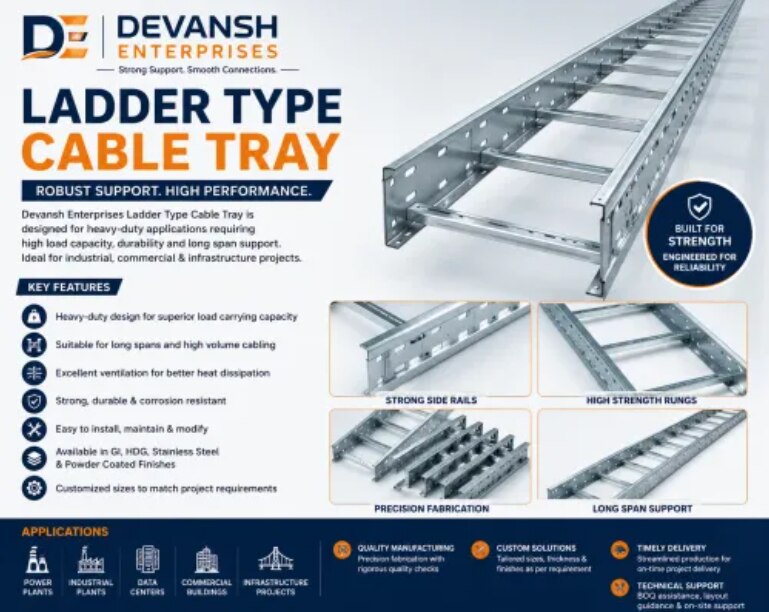
Devansh Enterprises can be included in that comparison only after its proposed tray and accessories are checked against the measured route, cable load, support span and project specification. Reject “heavy duty” as a standalone claim; require a stated load-versus-span basis.
For ladder cable tray replacement in Pune, make the handover include continuity results, bonding checks, photographs, measurements and an updated route drawing.
Related product
 | GI Ladder Type Cable Trays Manufacturers in Pune, PCMC, Maharashtra We Devansh Enterprises are renowned as leading GI Ladder Type Cable Trays Manufacturers in Pune. View product → |
Frequently asked questions
How do you choose between ladder cable tray repair or replacement in Pune?
Choose repair for isolated defects when both side rails, anchors and adjacent sections remain sound. Replace the section when damage is continuous or reduces structural capacity, fit or support integrity.
What should you inspect before repairing a ladder cable tray?
Identify the failed component, cable load and structural role, then inspect side rails, splice plates, bolts, rungs, brackets, anchors and adjacent tray sections before cleaning or moving cables.
When should you replace a ladder cable tray section?
Replace it when the rails are weakened, the tray no longer carries its cable load, the section cannot align with adjoining trays, or the surrounding supports and anchors have failed.
What costs should you compare before choosing ladder cable tray maintenance in Pune?
Compare materials with access equipment, cable support and handling, isolation, removal, installation, testing, reinstatement and downtime. A lower quoted item price may require more installed effort.
Keywords