The right tray depends on the cables, route conditions and maintenance demands—not simply the lowest price per metre. By the end, you can compare ladder and perforated designs, size the tray and supports, identify unsuitable applications, and request documents that make a commercial-building purchase defensible.
Key takeaways
- Use ladder tray for large, heavy power feeders needing ventilation and access.
- Use perforated tray for smaller power, control, instrumentation and communication cables.
- Size tray width from cable diameter, loading, spare capacity and bend space.
- Request drawings, material details, load data and support recommendations from suppliers.
How ladder tray and perforated tray differ in commercial buildings
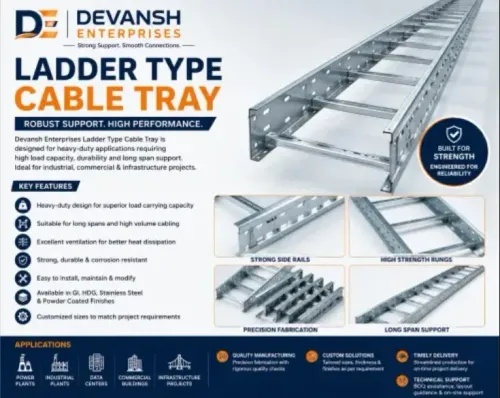
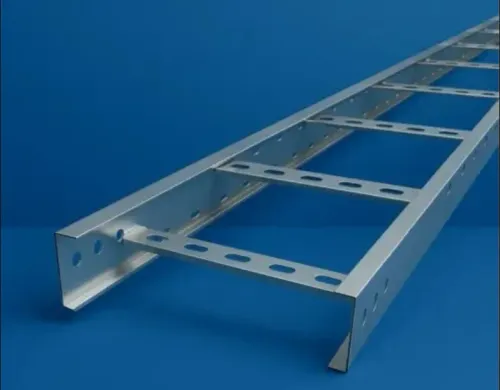
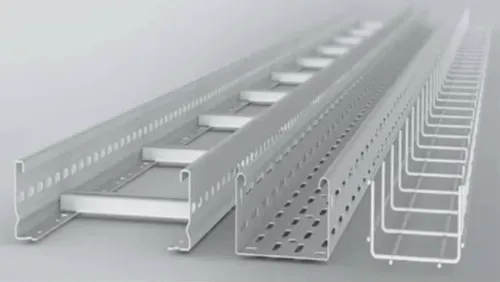
Choose by cable type, weight, diameter and route conditions—not by tray price alone. In commercial buildings, ladder tray suits large power feeders because its open rungs improve ventilation, inspection and access, while perforated tray gives smaller power, control, instrumentation and communication cables a more continuous base.
The right ladder or perforated cable tray in Pune depends on the installation, not the city label.
| Option | Practical advantage | Main trade-off |
|---|---|---|
| Ladder tray | Supports heavy cables with cleats; open sides help cooling and inspection | Small or loosely routed cables can sag or fall between rungs |
| Perforated tray | Supports small-diameter cables continuously and offers frequent tie-down points | It provides less open ventilation and can make large-cable access harder |
Treat ladder tray versus perforated tray in Pune as a containment comparison, not an ampacity shortcut. Conductor size, insulation temperature rating, ambient temperature, grouping, spacing and the manufacturer’s installation data determine current-carrying capacity; ladder construction does not automatically permit a higher load.
Perforated tray still needs ties or cleats at risers, vertical runs and bends. Ladder tray may need covers, dividers or closer rung spacing where cables need containment, protection from debris or a cleaner appearance. Keep power, emergency, fire-alarm, ICT and control circuits segregated where the design requires it, and allow space for future circuits.
Ask for IEC 61537 test evidence covering the specified width, thickness, configuration, finish and support span—not a generic load claim.
Match the tray to the cable route and building area
Power feeders and large-diameter cables on long basement, plant-room, riser, or rooftop routes favour ladder tray: rungs improve ventilation, access, and bend management. Do not infer higher ampacity from the tray; conductor size, insulation rating, ambient temperature, grouping, spacing, loaded circuits, and manufacturer data still control it.
Perforated tray suits smaller power, control, instrumentation, fire-alarm, ICT, security, and building-automation cables where a continuous base and frequent tie-down points keep cables organised. At vertical runs, risers, bends, and terminations, add cleats, ties, or other specified supports; perforations alone do not secure a cable.
| Tray | Favour it for | Commercial locations and route conditions |
|---|---|---|
| Ladder | Large power and emergency-power cables; long, ventilated runs; larger bend radii | Electrical risers, basement services, plant rooms, rooftops, and exposed routes |
| Perforated | Small power, control, instrumentation, fire alarm, ICT, security, and automation cables; close routing control | False ceilings, corridors, data rooms, short branches, and routes needing frequent tie-downs |
Choose among cable tray options for commercial buildings by circuit separation as well as physical fit. Keep life-safety, emergency, ICT, and power routes independent where the electrical design, fire strategy, or EMC assessment requires it; a divider does not automatically provide that independence.
Before ceiling closure, coordinate ducts, sprinklers, plumbing, lighting, access panels, and structural members. Select the finish for the exposure: pre-galvanized steel for dry interiors, hot-dip galvanizing after fabrication or stainless steel where condensation, fumes, or outdoor monsoon exposure demands it.
Calculate tray width, cable loading and support spacing
Size the tray from the cable schedule, then select supports from the tested load and span—not from “heavy-duty” wording. Calculate usable width as the sum of cable outside diameters, required separation, and the project’s spare-capacity allowance. Do not treat spare width as permission to exceed the specified fill limit.
Build the load in kilograms per metre by adding each cable’s manufacturer-published mass per metre, then include cleats, ties and other permanently supported items. Check ampacity separately using:
- Conductor size and insulation temperature rating
- Ambient temperature and grouping
- Number of loaded circuits
- Cable spacing and the manufacturer’s installation data
Ladder tray versus perforated tray in Pune does not decide ampacity by itself. Ladder tray can improve ventilation and access for large power cables, while perforated tray gives smaller control, communication and instrumentation cables a more continuous base.
Choose support spacing from the supplier’s load-versus-span table for the exact width, thickness, rung or perforation pattern, finish and joint arrangement. Confirm the table states allowable working load and deflection criterion. A rating at 1.5 metres cannot be extended to a 2-metre span.
Reduce spacing or add supports at bends, risers, vertical runs and splice locations, where concentrated loading can govern. Ask for IEC 61537 test evidence covering the supplied configuration, plus earthing provisions and corrosion-repair instructions. That evidence is a measurable basis for support spacing; “industrial grade” is not.
Know when another containment system is the better choice
Choose conduit when a circuit needs a closed, impact-resistant route: exposed drops, equipment connections, fire-rated penetrations or individual circuits requiring mechanical protection. Choose trunking when you need an enclosed, clean-looking route with removable covers and frequent access along a wall, riser or ceiling.
For cable tray options for commercial buildings, use the route environment and cable size rather than tray price alone.
| Option | What it means | When it applies |
|---|---|---|
| Conduit | Closed tube for individual or grouped cables | Exposed damage zones, short equipment connections, fire-rated penetrations and routes needing a sealed appearance |
| Trunking | Enclosed channel with a removable cover | Corridors, offices and risers where appearance, touch protection and orderly access matter |
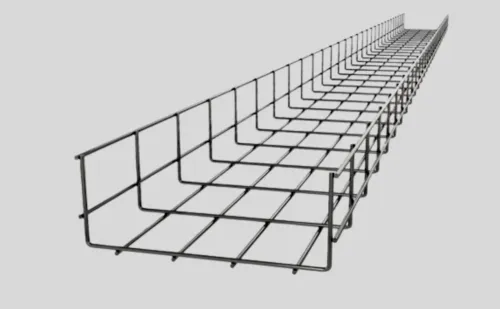
| Wire mesh tray | Open grid with close support and many tie points | Data, security, control and building-automation cables in congested ceilings or equipment areas |
| Solid-bottom tray | Continuous base beneath the cables | Small cables needing continuous support, routes below dusty work or areas where falling debris threatens the wiring |
Wire mesh tray is not a substitute for separation. Keep power, emergency power, fire alarm, ICT and security circuits in the routes required by the electrical design, fire strategy and EMC assessment; dividers do not automatically create independent systems.
Solid-bottom tray protects better but retains more heat and sheds less water than an open tray. Avoid it where ventilation is critical. Conduit and trunking also consume more installation time at bends, joints and cable pulls, so compare labour and access—not only material cost.
What to request from a cable tray supplier in Pune
Before placing the order, ask for documents that prove the quoted configuration—not a generic catalogue rating. The choice of ladder or perforated cable tray in Pune also needs a coordinated route drawing showing HVAC ducts, sprinkler mains, lighting, access panels, shafts and structural members before ceiling closure.
| Comparison point | Ladder tray | Perforated tray |
|---|---|---|
| Load evidence | IEC 61537 test evidence for the quoted width, thickness, rung spacing and support span | IEC 61537 evidence for the quoted perforation pattern, width, thickness and span |
| Cable support | Confirm cleats, ties and vertical-run supports for large cables | Confirm tie points and support for small cables at bends, risers and terminations |
| Fittings | Rung-compatible bends, tees, reducers, risers and covers | Matching bends, tees, reducers, dividers, covers and splice plates |
| Finish | State GI, electro-galvanized or hot-dip galvanized finish, coating designation and indoor or outdoor suitability | Request the same details; perforations must retain corrosion protection after fabrication |
Your cable tray supplier in Pune should issue a project-specific layout and bill of materials covering straight lengths, bends, tees, reducers, risers, covers, dividers, splice plates, bonding jumpers, supports and fasteners. Compare fitting availability and delivery, not only the price per metre.
Also request:
- Material grade, tray thickness, allowable load, support spacing and deflection limits
- Electrical continuity or bonding test evidence
- Manufacturer installation data for cable spacing, grouping and ampacity
- Finish inspection records and touch-up instructions for cut edges
Send the approved span schedule to Devansh Enterprises and require the quotation to identify every fitting and finish rather than burying them under “accessories.”
Related products
 | Cable Tray Manufacturer Devansh Enterprises, Pune, specializes in manufacturing high-quality cable management solutions designed for industrial, commercial, and... View product → |
 | GI Ladder Type Cable Trays Manufacturers in Pune, PCMC, Maharashtra We Devansh Enterprises are renowned as leading GI Ladder Type Cable Trays Manufacturers in Pune. View product → |
Frequently asked questions
What is the difference between ladder tray and perforated tray in commercial buildings?
Ladder tray uses open rungs, making it suitable for large power feeders that need ventilation, inspection and access. Perforated tray provides a more continuous base for smaller power, control, instrumentation and communication cables.
How do you choose between ladder and perforated cable tray in Pune?
Match the tray to cable type, weight, diameter and route conditions. Review the building area, exposure, access needs, cable separation and support arrangement before selecting a tray.
How do you calculate cable tray width and support spacing?
Add the cable diameters, required separation and spare capacity to determine tray width. Check cable weight per metre against the tray load rating and use the supplier's tested support-spacing guidance for the selected tray and installation conditions.
When is another cable containment system better than ladder or perforated tray?
Choose another system when cables need a closed, protected route, stronger segregation, high ingress protection or a compact path through a restricted building area. Raceway, conduit or trunking can suit those conditions better.
What should you request from a cable tray supplier in Pune?
Request tray dimensions, material and finish, load data, support-spacing limits, accessories, installation drawings, cable-fill guidance and product documentation for the proposed commercial route.
Related products
 | Cable Tray Manufacturer Devansh Enterprises manufactures high-quality Ladder Type Cable Trays designed for heavy-duty cable management applications in industrial,... View product → |
 | Cable Trays Manufacturers in Pune, PCMC, Maharashtra Top Cable Tray Manufacturer in Pune, PCMC and Maharashtra– Durable & Reliable Cable Management Solutions. View product → |
 | Cable Tray Manufacturer Devansh Enterprises manufactures high-quality Perforated Cable Trays designed to provide efficient, safe, and organized cable management solutions... View product → |
 | GI Perforated Cable Trays Manufacturers in Pune,PCMC, Maharashtra Welcome to Devansh Enterprises - one of the leading Cable Tray Manufacturer in Pune, PCMC and Maharashtra, we are leading GI Perforated cable trays... View product → |
Keywords